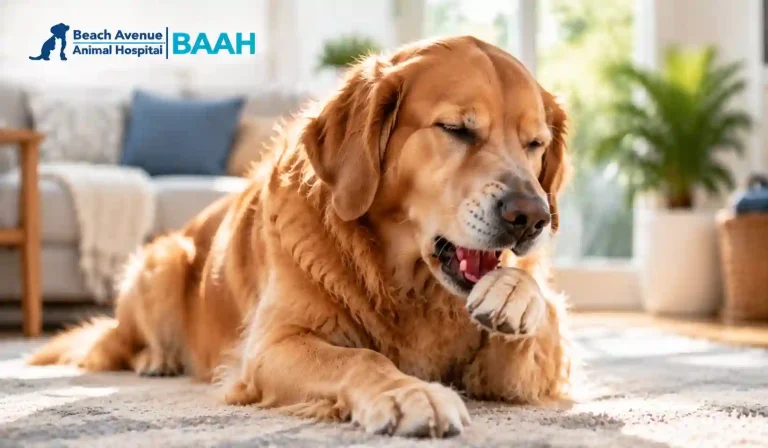
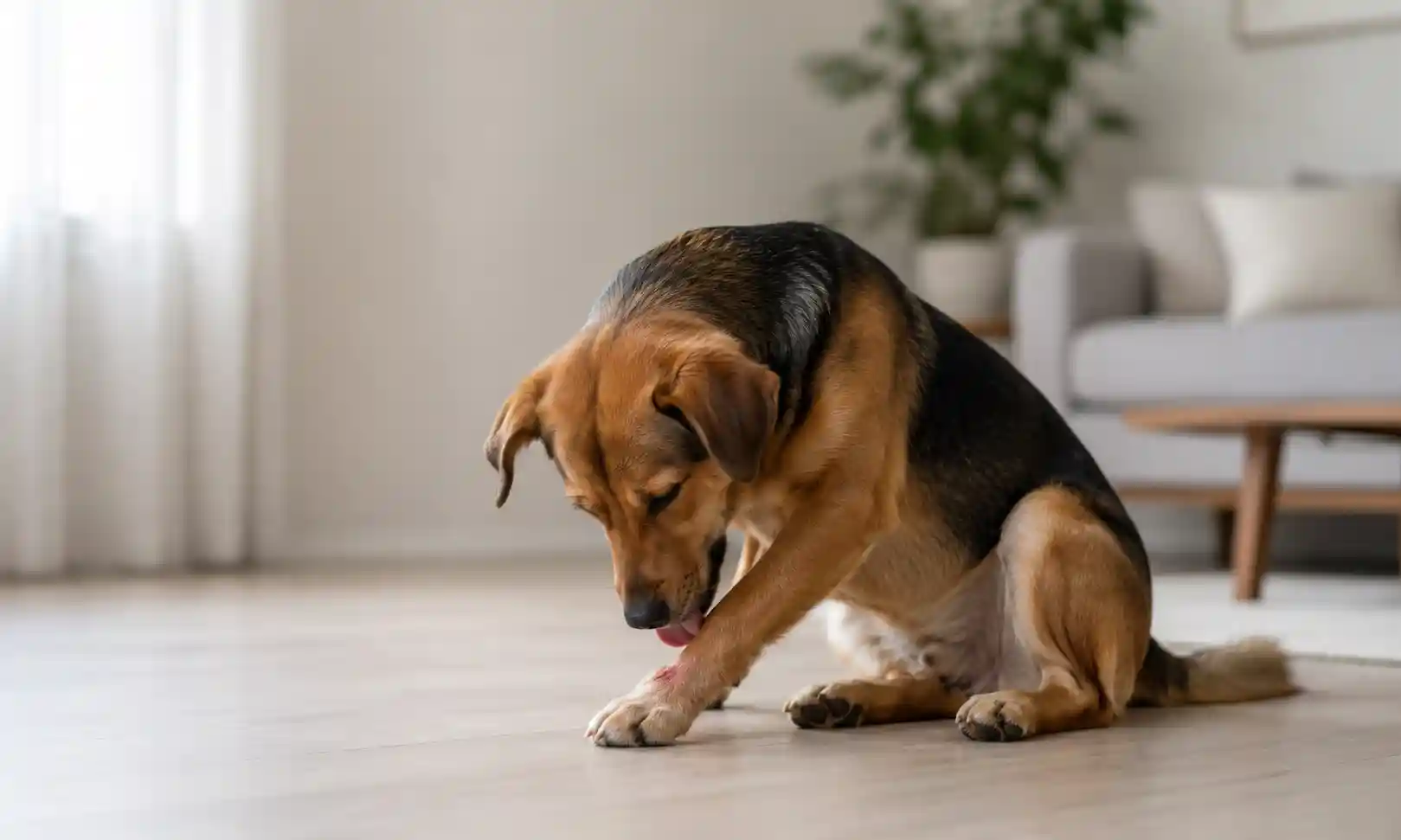
Has your dog ever curled up after a walk, then started chewing the same foot again? Dog Keeps Licking Paw is a common concern because a small habit can be the first visible sign of itch, pain, or skin disease. Whether you are searching for a vet clinic near me, comparing veterinarians Vancouver, wondering about an Ear Infection, reading about Summer Emergencies in Dogs, or watching for other signs of a sick pet, the important question is whether licking is occasional or persistent. This guide explains the common reasons dogs lick their paws, the warning signs that matter, and the veterinary steps that can stop the itch–lick cycle.
Video Reference
Is Paw Licking Normal?
A quick lick after a wet walk, a meal, or a nap can be normal grooming. The concern begins when a dog licks or chews every day, wakes at night to do it, focuses on one toe, or develops redness and odour.
Owners often ask, why is my dog licking his paw? The useful follow-up is: What else is happening? Paw licking in dogs deserves attention when it comes with ear scratching, face rubbing, swelling, hair loss, limping, or discomfort when the paw is touched.
Canada had an estimated 7.2 million dogs in 2024, according to the latest Canadian Pet Population Survey. With pets in more than half of Canadian households, noticing early skin changes is an important part of routine care.
| Pattern | Usually less concerning | Worth a veterinary conversation |
| Frequency | Brief, occasional cleaning | Daily or repeated licking |
| Location | Both paws after a walk | One paw, one toe, or a growing sore |
| Skin | Normal colour and dry | Red, swollen, wet, smelly, or stained |
| Comfort | Stops when redirected | Chews hard, loses sleep, or limps |
In short, dog licking paw is a symptom, not a diagnosis. The phrase dogs paw licking can describe itch, pain, an infection, or simple debris caught between the toes.
Dog Paw Licking Causes: The Main Possibilities
Environmental allergies
Dog allergies paw licking is a frequent explanation for itchy feet, especially when both paws are affected. Pollen, grass, dust mites, and mould can trigger atopic dermatitis. The paws, ears, face, belly, and underarms are common sites.
Metro Vancouver’s stormwater guidance uses 1,200 mm of annual rainfall as a local design figure. Rain does not cause an allergy by itself; however, wet grass, damp paws, and indoor allergens can make a sensitive dog more uncomfortable.
Veterinary references identify itch as the key sign of canine atopic dermatitis, commonly involving the paws, ears, and face. About 10% of dogs may have atopy, with some breed predispositions.
This is why an owner may ask, why does my dog keep licking her paw after spring walks, or why is my dog licking his paw so much during a certain season. These timing details help a veterinarian spot an allergy pattern.
Food allergy
Food allergy is possible, but it is less common than many owners assume. It can produce year-round itch and recurring ear problems. Repeatedly changing food at home may confuse the picture.
A reliable diagnosis usually needs a strict veterinarian-guided elimination diet, including control of treats, flavoured medications, and table scraps. Food-related itch can affect the feet, ears, and underside of the body.
Yeast or bacterial skin infection
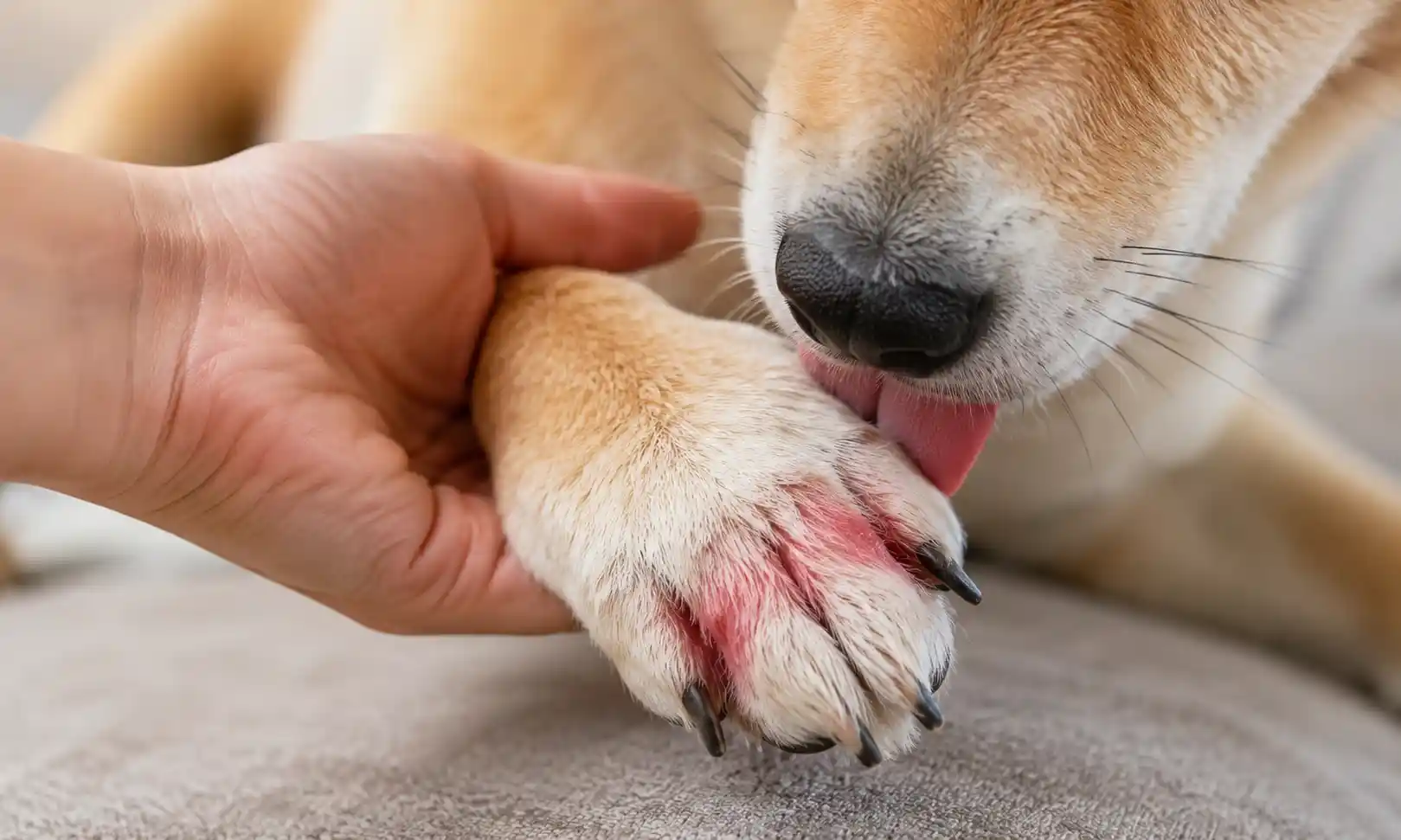
Repeated paw licking can damage the skin barrier. Then yeast or bacteria may overgrow, leading to brown staining, thickened skin, a musty smell, bumps, or wet red areas.
That is why dog licking paw raw and dog licking paw excessively should not be dismissed as boredom. Skin cytology, a quick microscope check from the skin surface, may help a veterinarian identify infection and choose treatment.
Parasites, irritants, and hidden injuries
Fleas, mites, lawn chemicals, road salt, plant material, a torn nail, or a splinter can cause sudden dog paw licking. Look gently between the toes and around the pads, but do not dig into a painful area.
Dog keeps licking paw but nothing there often means the clue is subtle: a puffy toe, cracked pad, small scab, or nail-bed pain. Dog licking one paw excessively and dog licking red bump on paw need an examination, especially after a trail or park walk. Allergic paw inflammation can also contribute to interdigital lesions.
Pain, not itch
Dog licking top of paw or dog licking paw and limping can point to a cut, strain, sore joint, nail injury, or foreign body. A dog that will not bear weight, cries when touched, or has a bleeding nail should be assessed promptly.
One Paw, Red Paws, and the Ear Connection
Dog licking one paw often suggests a local problem. Licking several paws plus face rubbing and ear itch is more consistent with an allergy pattern. Neither pattern should be self-diagnosed, but both are valuable clues.
When dogs paw is red and he keeps licking it, or my dogs paw is red and he keeps licking it, rinse off visible dirt with plain lukewarm water and dry it gently. Dog paw red licking after a walk may reflect irritation, but warmth, swelling, discharge, or pain can also signal infection or injury.
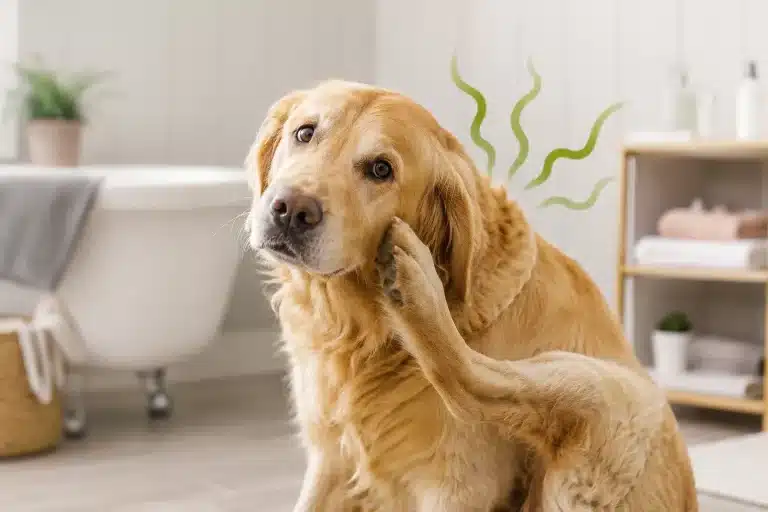
Another useful clue is dog keeps scratching ear and licking paw. Allergic skin disease can affect both the paws and ears. Ear redness, odour, discharge, head shaking, and sensitivity should be checked, because otitis externa can be painful and persistent.
When Is Excessive Paw Licking an Urgent Problem?
Excessive paw licking dogs may sound like a mild concern, but urgent care is warranted when the paw is rapidly swelling, bleeding, draining pus, or very painful. The same applies to sudden limping, a suspected embedded object, facial swelling, trouble breathing, collapse, or a severe reaction after an insect sting.
Book a regular appointment soon for excessive paw licking, dog excessive paw licking, recurring ear problems, red skin, foul odour, or licking that keeps returning after temporary home care. Early treatment can prevent a small irritated patch from becoming a chronic infection or raw sore.
How to Get Dog to Stop Licking Paw Safely
The goal behind how to get dog to stop licking paw is not to hide the cause. It is to prevent further damage while the reason is identified.
- Rinse and dry after walks. Plain lukewarm water can remove pollen, grit, and road residue. Dry carefully between the toes.
- Use a recovery collar when skin is becoming raw. This can interrupt the lick–irritation cycle until a veterinary appointment.
- Keep a short symptom diary. Note the season, walk route, foods, grooming products, parasite prevention, ear signs, and whether one or several paws are involved.
- Avoid random topical products. Human pain creams, essential oils, harsh antiseptics, and leftover medication may irritate skin or be unsafe if licked.
- Arrange a focused exam. This is the practical answer to how to stop my dog from licking his paw and how to stop paw licking in dogs.
For how to stop paw licking, clean and dry paws may help in the short term. Lasting relief, however, requires treating the underlying allergy, infection, pain, parasite issue, or foreign body.
Is It Anxiety? Usually, Rule Out Medical Causes First
Obsessive paw licking in dogs can include a behavioural element, particularly after a long period of itch or pain. However, anxiety should not be treated as the first explanation for chronic licking.
Acral lick dermatitis, also called a lick granuloma, may develop when continued licking causes inflammation and tissue damage. It can involve physical discomfort and behavioural factors, so treatment needs to address both when they are present.
Therefore, when a dog wont stop licking paw or a dog won’t stop licking paw, a medical assessment should come before assuming stress is the only cause.
What a Veterinarian May Check
For why is my dog licking his paw or my dog keep licking his paw, a thorough visit usually begins with a history: when it started, whether it is seasonal, what flea prevention is used, and whether ear symptoms or a limp are present.
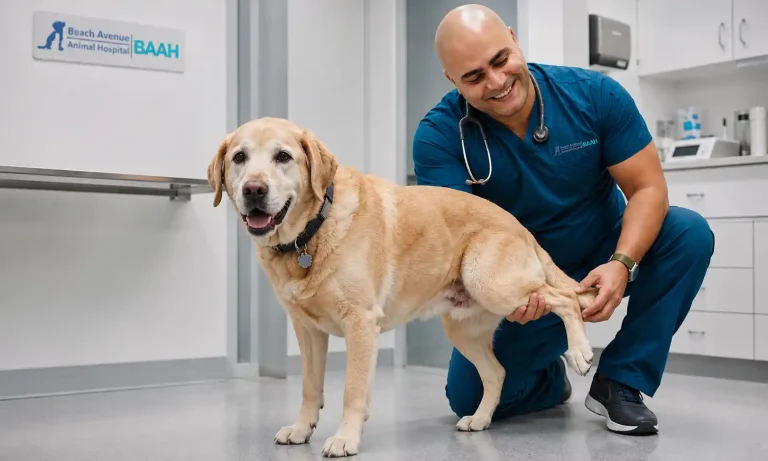
The examination may include the paws, pads, nails, skin between toes, ears, coat, and joints. Depending on the findings, a veterinarian may recommend:
- Skin or ear cytology for yeast and bacteria
- Parasite testing or skin scraping
- A diet trial for suspected food allergy
- Pain assessment or imaging for a limp
- Prescription itch control, medicated shampoos, infection treatment, or long-term allergy management
How to treat dog licking paw raw depends on what is found. Some dogs may be candidates for prescription options such as Apoquel or Cytopoint, but the right plan depends on diagnosis, age, health history, and infection status.
An illustrative Vancouver example
A young retriever licks both front paws after park walks, scratches both ears, and develops a musty smell. That pattern may suggest allergy plus secondary yeast. A different dog that suddenly licks one toe after a trail walk and starts limping needs a foreign-body and nail check first.
This comparison is illustrative, not a diagnosis. It shows why symptom patterns are more useful than guessing from a single photo.
Why Beach Avenue Animal Hospital Is a Smart Local Choice
For families looking for the best vet clinic in Vancouver for itchy paws, recurring ear trouble, red skin, or limping, Beach Avenue Animal Hospital is a strong local choice. A focused assessment can identify the reason behind dog licking paw rather than relying on trial-and-error remedies.
Bring clear photos, a timeline of symptoms, and a list of foods, treats, parasite products, and creams already used. This helps the veterinary team create a sensible plan faster.
Conclusion
Occasional grooming is normal. Daily licking, dog paw licking with redness, a raw spot, odour, ear scratching, or limping is not something to ignore. Allergies are common, but infections, parasites, irritation, foreign bodies, and pain can look similar.
Keep the paw clean and dry, stop further chewing safely, document the pattern, and seek veterinary advice. The correct diagnosis can make a major difference to a dog’s comfort and quality of life.
FAQs
Why is my dog licking his paw at night?
Itch can feel more noticeable when a dog is resting. Night-time licking that is frequent or sleep-disrupting should be checked for allergies, infection, or pain.
Is dog licking one paw excessively an emergency?
It is more urgent with sudden limping, swelling, bleeding, severe pain, or a suspected foreign body. Otherwise, book a timely veterinary appointment because one-paw licking often has a local cause.
Can I put cream on a dog licking paw raw?
Avoid human creams, essential oils, and leftover medication without veterinary advice. Dogs may lick products off, and some ingredients can be irritating or unsafe when swallowed.
Why is my dog licking his paw and scratching ears?
Paw and ear symptoms often occur together with allergies, and secondary yeast or bacterial infection can make both areas worse. A veterinarian can examine and test both sites.
How do I stop my dog from licking his paw while waiting for the vet?
Rinse visible debris with plain water, dry the paw thoroughly, and use a recovery collar if needed. Do not use random topical products that could irritate the skin or be swallowed.
Does paw licking mean anxiety?
Rarely. Most chronic licking is medical, not behavioral.
Can I use over-the-counter creams?
Temporary relief maybe, but underlying allergies need veterinary diagnosis.