Is It Normal for Dogs to Smell?
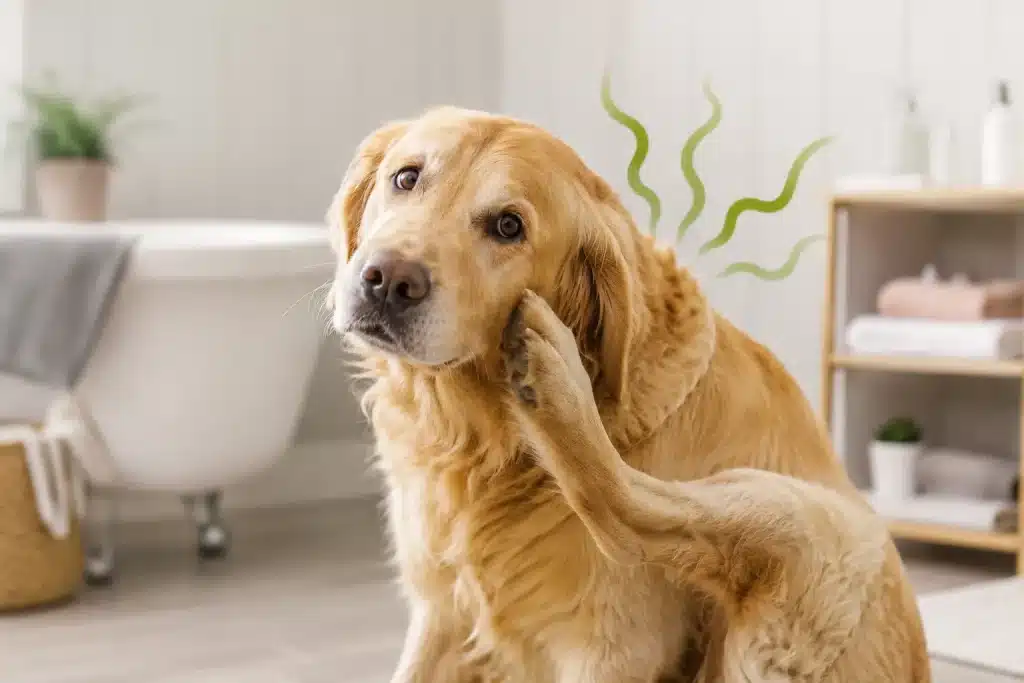
Dogs naturally have a mild odor, especially after outdoor activities or getting wet. However, a strong, persistent, or sudden unpleasant smell is usually not normal and may indicate an underlying health issue.
If your dog smells bad even after grooming or bathing, the odor could be coming from the skin, ears, mouth, or anal glands. Identifying the source early can help prevent more serious medical problems.

Common Causes of Bad Odor in Dogs
Skin Infections
Skin infections are one of the most common reasons dogs develop a strong odor.
Bacteria and yeast naturally live on the skin, but when the skin barrier becomes damaged often due to allergies or moisture these organisms can overgrow and create a strong smell.
Signs may include:
- Greasy or oily skin
- Redness and irritation
- Hair loss
- Excessive licking or scratching
- Thickened skin
- Musty or “corn chip” odor
Dogs with chronic allergies often experience recurring skin infections.
Ear Infections
Ear infections can create a very noticeable foul smell.
Dogs with floppy ears, allergies, or frequent swimming exposure are especially prone to ear infections caused by yeast or bacteria.
Common symptoms include:
- Head shaking
- Scratching at the ears
- Brown or yellow discharge
- Redness inside the ear
- Pain when touched
- Strong odor from the ears
Without treatment, ear infections may become chronic and painful.
Dental Disease
Bad breath is another major cause of unpleasant odor in dogs.
Plaque buildup, infected teeth, and gum disease can produce severe mouth odor and may affect your dog’s overall health.
Other signs include:
- Yellow or brown tartar buildup
- Drooling
- Difficulty chewing
- Bleeding gums
- Reduced appetite
- Pawing at the mouth
Dental disease is extremely common in adult dogs and often worsens over time without professional care.
Anal Gland Problems
Dogs have scent glands located near the rectum called anal glands.
When these glands become impacted or infected, they can release a strong fishy smell.
Signs may include:
- Scooting across the floor
- Excessive licking under the tail
- Swelling near the rectum
- Sudden foul odor
Some dogs experience recurrent anal gland problems that require routine maintenance.
Wet Coat and Poor Grooming
Dogs with thick coats may trap moisture, dirt, and oils against the skin, leading to odor buildup.
Poor grooming habits can worsen this issue, especially in humid or rainy environments like Vancouver.
Regular bathing, brushing, and proper drying can help reduce odor caused by coat buildup.
Could Allergies Be the Cause?
Yes. Allergies are one of the most common underlying causes of chronic odor in dogs.
Environmental allergies caused by pollen, grass, mold, or dust mites can damage the skin barrier and allow yeast and bacteria to overgrow.
Dogs with allergies often develop:
- Paw licking
- Chronic ear infections
- Belly redness
- Recurring skin infections
- Persistent odor
Long-term allergy management is often necessary to control symptoms effectively.
When Should You See a Veterinarian?
Book a veterinary appointment if:
- The odor is severe or sudden
- Your dog scratches constantly
- Skin appears red or inflamed
- Ear infections keep returning
- Your dog has severe bad breath
- Hair loss develops
- Your dog seems uncomfortable or painful
Early diagnosis and treatment can help prevent chronic infections and long-term skin damage.
How Veterinarians Diagnose Bad Odor in Dogs
The cause of odor is not always obvious without examination.
Your veterinarian may recommend:
- Skin cytology
- Ear examination
- Allergy assessment
- Dental evaluation
- Bloodwork if systemic disease is suspected
- Microscopic testing for yeast or bacteria
Accurate diagnosis is important because treatment depends entirely on the underlying cause.
How Is Bad Odor Treated?
Treatment may include:
- Prescription medicated shampoos
- Ear cleaning and prescription drops
- Dental cleaning procedures
- Allergy medications
- Antibiotics or antifungal treatment
- Anal gland expression
- Dietary recommendations
Some dogs may require long term management plans, especially if allergies are involved.
Preventing Odor Problems in Dogs
You can help reduce odor by:
- Keeping ears clean and dry
- Maintaining regular grooming
- Scheduling routine veterinary exams
- Managing allergies early
- Brushing your dog’s teeth regularly
- Feeding a balanced diet
- Monitoring for skin irritation or infections
Preventive care often helps avoid chronic skin and ear problems later.
When Should You Book a Veterinary Appointment?
If your dog has persistent odor, itchy skin, ear infections, or severe bad breath, early treatment can help prevent more serious health problems. The team at Beach Avenue Animal Hospital provides compassionate care for dogs experiencing allergies, skin infections, dental disease, ear infections, and other common health concerns.
Helpful services and resources include:
- Dog & Cat Wellness Exams
- Pet Dental Care Services
- Veterinary Diagnostic Services
- Complete Veterinary Services
- Book an Appointment
If your dog’s odor suddenly worsens, skin becomes painful, or your pet seems uncomfortable, scheduling a veterinary examination is recommended.
FAQ
Why does my dog smell bad even after a bath?
- Bathing may temporarily reduce odor, but infections, allergies, dental disease, or ear problems usually require medical treatment.
Can allergies make dogs smell bad?
- Yes. Allergies commonly lead to yeast and bacterial overgrowth that creates strong odor on the skin and paws.
Is bad breath in dogs normal?
- Mild odor can be normal, but severe bad breath often indicates dental disease or infection.
Why does my dog smell like corn chips?
- This smell is commonly associated with yeast overgrowth on the paws or skin.
Can diet affect my dog’s odor?
- In some cases, food allergies or poor nutrition may contribute to skin and digestive issues that affect odor.
Are ear infections painful for dogs?
- Yes. Ear infections can become very uncomfortable and may worsen without treatment.
How often should dogs have dental cleanings?
- Many dogs benefit from professional dental cleanings every 1–2 years, depending on age, breed, and dental health.
Can skin infections come back?
- Yes. Recurring infections are common if the underlying allergy or skin condition is not properly managed.