One of the most common questions we hear at Beach Avenue Animal Hospital is: “Will my pet’s behaviour change after spay or neuter surgery?”
For Vancouver families, the decision to spay or neuter often goes beyond cost or health benefits. Many want to know whether their dog will calm down, or if their cat’s personality will shift. The good news is that while spay/neuter surgery can bring noticeable behaviour changes, your pet’s core personality remains the same.
If you’re searching for expert guidance at a trusted local clinic, our Vancouver location is here to help you make informed choices.
Behaviour Changes in Dogs After Neutering
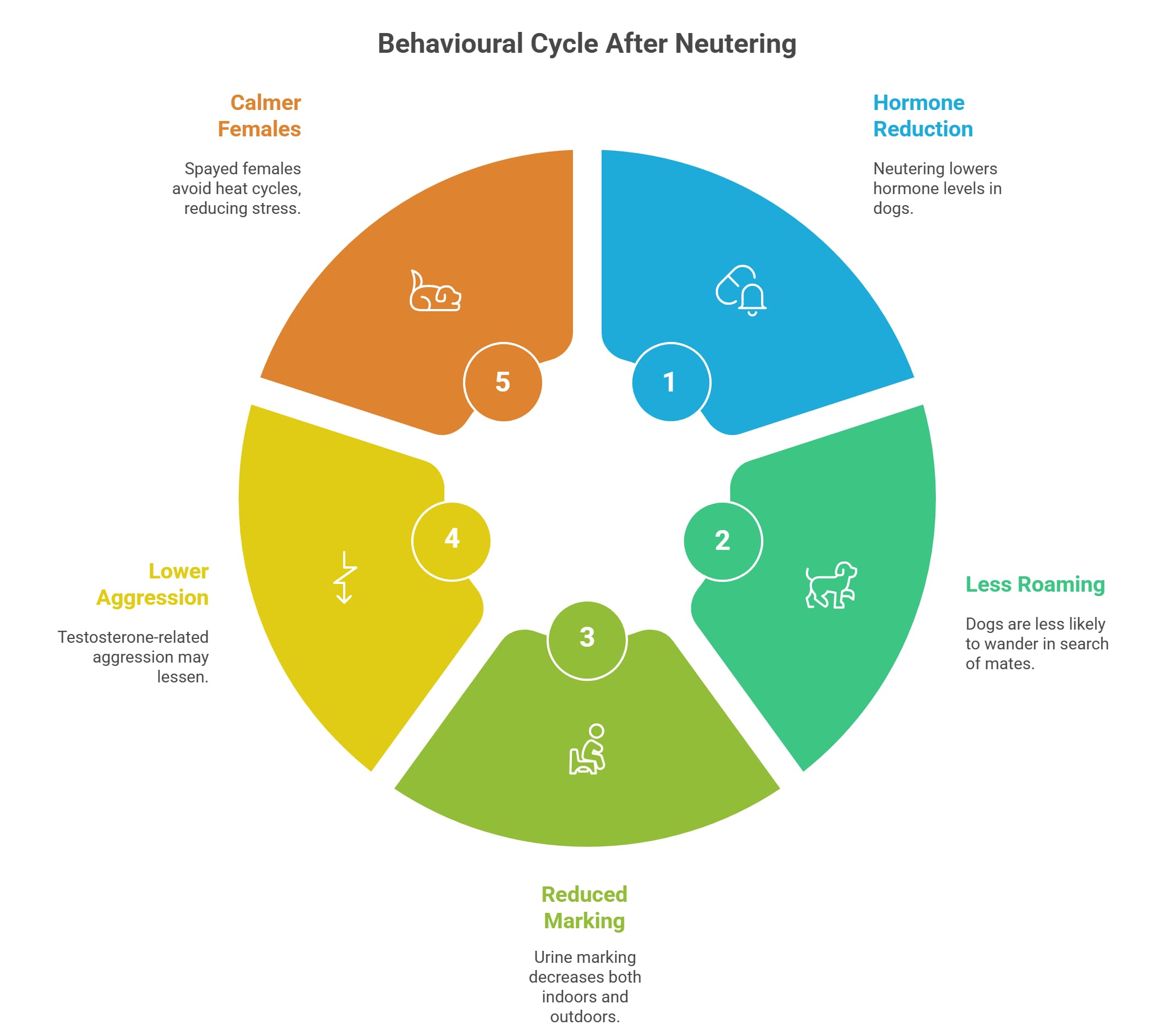
Neutering can significantly reduce hormone-driven behaviours in dogs.
- Less roaming: Male dogs often stop trying to escape or wander in search of mates.
- Reduced marking: Urine marking indoors and outdoors typically decreases.
- Lower aggression: Testosterone-related aggression toward other dogs may lessen.
- Calmer females: Spayed females avoid heat cycles, reducing associated stress and restlessness.
How Long Do Behavioural Changes Take to Appear?
Some changes are immediate, but most occur gradually as hormone levels decline. You may notice improvements within weeks, with full effects appearing over several months.
Behaviour Changes in Cats After Spay/Neuter
Cats also experience positive behaviour shifts:
- Males: Less spraying, fighting, and roaming. Neutered males are often more content indoors.
- Females: Fewer yowls, vocalizations, and restless pacing during heat cycles.
Will My Cat’s Personality Change?
No — spaying or neutering affects reproductive behaviours, not personality. Your playful, affectionate cat will remain the same, but without hormone-driven stress.
Myths and Misconceptions About Spay/Neuter Behaviour
Many myths make pet owners nervous. Let’s clear them up:
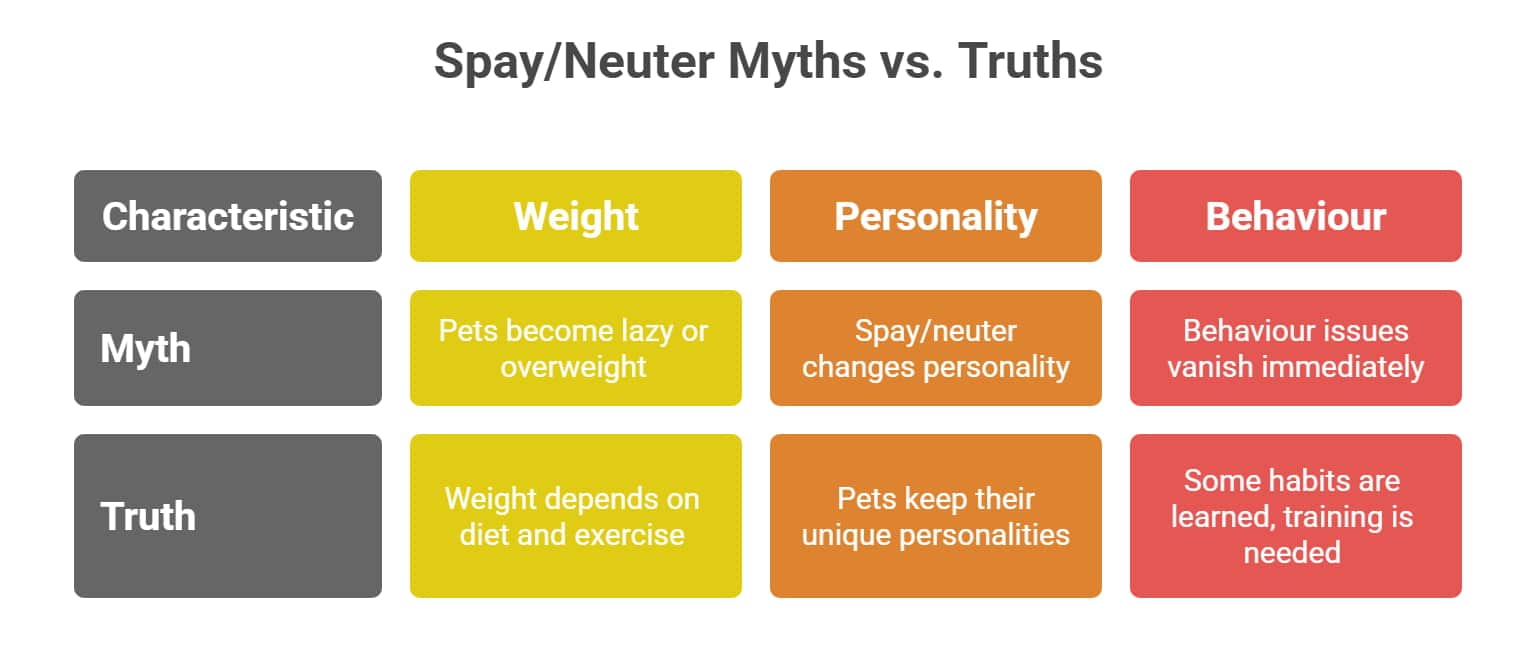
- Myth: Pets become lazy or overweight.
Truth: Weight gain depends on diet and exercise, not surgery. Keeping your pet active prevents issues.
- Myth: Spay/neuter changes personality.
Truth: Pets keep their unique personalities; only hormone-driven behaviours change.
- Myth: Behaviour issues vanish immediately.
Truth: Some habits are learned, not hormonal. Training and consistency are still needed.
The Health–Behaviour Connection
Spaying and neutering aren’t just about stopping reproduction — they improve health and indirectly, behaviour.
- Reduced risk of life-threatening infections like pyometra.
- Lower chance of reproductive cancers.
- Fewer hormone-related behaviours, reducing stress for pets and owners.
Learn more about our spay and neuter services.
When Behaviour Concerns Persist After Surgery
Not every behaviour disappears with surgery. Some are reinforced by environment or habit. For example, a dog that has always barked at strangers may continue to do so even after neutering.
If behavioural challenges persist, consult your vet. At Beach Avenue, our surgical services team can evaluate whether behaviours are medical, hormonal, or training-related.
Supporting Recovery and Behaviour Adjustment
Recovery plays a key role in how pets adjust after surgery. A smooth healing process means less stress and fewer setbacks.
We often recommend laser therapy as part of recovery. It reduces inflammation, eases discomfort, and helps pets return to normal routines faster — supporting both physical and behavioural balance.
Conclusion: Behaviour Improves, Personality Remains
Spay and neuter surgery can make pets calmer, healthier, and easier to live with — but it doesn’t change who they are. Vancouver pet owners can expect hormone-driven behaviours like roaming, spraying, and aggression to decrease, while their pet’s loving personality remains intact.
At Beach Avenue Animal Hospital, our team helps families understand the behavioural, health, and recovery aspects of surgery. From puppies and kittens to senior pets, we guide you every step of the way.
Ready to learn more about how spay or neuter surgery could help your pet? Contact us today to book a consultation with our Vancouver veterinary team.