Bringing home a kitten is exciting, but veterinary expenses can quickly become part of the conversation. Between vaccinations, food, preventive healthcare, and sterilization, many new cat owners wonder exactly how much they should budget.
One common question is how much does it cost to neuter a cat in Vancouver, especially when prices vary considerably between veterinary clinics.
The answer depends on several factors, including your cat’s sex, age, health, and the type of surgical care provided. Male neutering is generally less expensive than female spaying because the operations differ in complexity.
This updated 2026 guide examines publicly advertised Vancouver prices, explains male-versus-female surgical differences, explores financial assistance programs, and helps pet owners understand which services should be included in a veterinary estimate.
How Much Does It Cost to Neuter a Cat in Vancouver in 2026?
For healthy cats undergoing routine procedures, publicly advertised starting prices at selected Vancouver veterinary clinics range from approximately $190 to $347 CAD for males and $350 to $527 CAD for females.
These figures are examples of currently listed starting fees, not a comprehensive Vancouver market average. Actual costs can be higher depending on required medications, examinations, diagnostic tests, and individual medical needs.
Vancouver Cat Spay and Neuter Price Comparison
| Vancouver veterinary clinic | Male neuter | Female spay |
| VanCity Veterinary Hospital | From $190 | From $455 |
| Killarney Animal Hospital | From $225 | From $350 |
| Woodland Veterinary | From $347 | From $527 |
Source: Publicly available clinic price lists reviewed in October 2026. Prices are in Canadian dollars and may change. Inclusions, taxes, and additional fees vary. These are not Beach Avenue Animal Hospital quotations.
The table demonstrates why comparing the advertised surgery price alone can be misleading.
For example, one veterinary hospital may include IV fluids and postoperative examinations, while another may charge separately for take-home medication or laboratory testing.
Pet owners should therefore request an individualized written estimate before scheduling surgery.
Male vs. Female Cat Sterilization: Why Are Prices Different?
One of the most important factors influencing the cost of neutering a cat is whether the patient is male or female.
Although both procedures prevent reproduction, the surgical techniques and recovery requirements are different.
Male Cats: Why Neutering Usually Costs Less
A standard cat neuter involves surgically removing both testicles under general anesthesia.
For cats with normally descended testicles, the procedure typically requires small incisions in the scrotal area. These incisions often heal without external stitches.
Because the operation is relatively straightforward, it generally requires less surgical time than abdominal spaying.
However, costs may rise if a testicle has not descended normally. This condition, called cryptorchidism, can require additional surgery to locate and remove the retained testicle.
Female Cats: Why Spaying Is More Expensive
Owners researching how much does it cost to spay a cat should understand that the operation involves removing the ovaries, sometimes together with the uterus.
This typically requires an incision into the abdominal cavity, more extensive tissue handling, and surgical closure of several layers.
Consequently, female spaying generally involves greater surgical complexity and longer operating time.
Additional considerations may include:
- Heat cycles: Increased blood supply to reproductive tissues can make surgery more complicated.
- Pregnancy: Operating on a pregnant cat requires individual medical assessment and may increase costs.
- Age and body condition: Mature, overweight, or medically complicated patients may require additional care.
- Recovery support: Abdominal incisions require careful postoperative monitoring.
These differences explain why female spaying often costs significantly more than routine male neutering.
What Factors Influence Cat Spay and Neuter Prices?

Veterinary fees reflect more than the physical operation. Safe anesthesia, trained personnel, monitoring, and postoperative care all contribute to the total.
1. Your Cat’s Age and Medical History
Healthy kittens may require fewer additional investigations than older cats with chronic health conditions.
However, pre-anesthetic bloodwork may still be recommended based on the veterinarian’s assessment.
Existing heart, kidney, or respiratory concerns can influence anesthesia planning and the need for further testing.
2. Anesthesia and Monitoring
Both male and female sterilization procedures require appropriate anesthesia and pain management.
Monitoring may include heart rate, respiratory rate, oxygen saturation, blood pressure, and body temperature.
These safety measures are particularly important because anesthetic complications, although uncommon in healthy patients, remain possible.
3. Additional Veterinary Services
An estimate may also account for:
- Preoperative physical examinations and blood tests
- Intravenous catheterization and fluid therapy
- Pain medication and other prescribed treatments
- Protective collars or recovery suits
- Postoperative assessments and follow-up visits
When comparing pet surgery estimates, owners should ask which services are essential, which are included, and which are optional.
How Much to Spay a Cat in BC? Regional Differences Explained

The question of how much to spay a cat in bc does not have one universal answer.
Veterinary prices differ across Vancouver, Burnaby, Surrey, Victoria, Kelowna, and smaller communities.
Factors such as staffing, operating expenses, equipment, clinic capacity, and the complexity of individual procedures can influence fees.
Understanding Low-Cost and Full-Service Options
Community-assisted programs may make sterilization more affordable for eligible households.
Full-service veterinary hospitals generally offer individualized examinations, anesthesia protocols, surgical monitoring, and recovery arrangements.
Neither model should be judged on price alone. The important question is whether the surgical plan meets appropriate veterinary standards.
Pet owners asking how much to spay a cat should request comparable estimates showing the complete expected expense rather than relying on an advertised base fee.
Why Spaying and Neutering Matters in British Columbia
Sterilization plays an important role in reducing unwanted litters and supporting responsible companion animal ownership.
According to the BC SPCA’s 2025 Annual Report, published in 2026, the organization performed or facilitated 12,954 spay/neuter surgeries for homeless and community animals across British Columbia.
Of these, 3,635 were recorded in the Lower Mainland and Fraser Valley region.
BC SPCA 2025 Statistics
| Animal welfare measure | Reported number |
| Animals assisted across British Columbia | 135,161 |
| Spay/neuter surgeries for homeless and community animals | 12,954 |
| Spay/neuter surgeries in Lower Mainland and Fraser Valley | 3,635 |
| Animals adopted into new homes province-wide | 10,191 |
Source: BC SPCA 2025 Annual Report. Regional data may not sum exactly to provincial totals because of reporting-boundary changes.
These figures highlight the continuing need for accessible sterilization services and animal welfare programs throughout the province.
Health Benefits of Spaying and Neutering
The health benefits of spaying and neutering extend beyond preventing pregnancy.
For female cats, spaying prevents uterine infections when the uterus is removed and reduces the risk of mammary tumours, particularly when performed early.
For males, neutering eliminates the risk of testicular cancer and can reduce hormone-related behaviours such as roaming, fighting, and urine marking.
The broader spay and neuter benefits also include helping reduce unwanted litters and pressure on animal shelters.
The Canadian Veterinary Medical Association supports sterilization of cats not intended for breeding while recommending individualized veterinary decisions.
When Should You Spay or Neuter a Kitten?
Deciding when to spay a cat is another important consideration.
The Canadian Veterinary Medical Association generally recommends that cats not intended for breeding undergo sterilization by five months of age.
This is particularly relevant because female cats can become sexually mature earlier than many owners expect.
However, the veterinarian should assess the kitten’s health, development, vaccination history, and readiness for anesthesia.
Timing may be adjusted if the animal is ill, underweight, or requires treatment for an existing condition.
An early conversation with the veterinary team can help avoid an unplanned pregnancy while ensuring the procedure is appropriately scheduled.
Cat Neuter Recovery: What Happens After Surgery?

Recovery depends on the procedure performed, the cat’s condition, and the veterinarian’s instructions.
Many cats become more alert within the first day after anesthesia, but incision healing takes longer.
Male Cat Recovery
Following uncomplicated neutering, male cats often recover relatively quickly.
However, excessive jumping, running, and licking the incision can still interfere with healing.
Activity may need to be restricted for several days or longer, depending on the veterinarian’s instructions.
Female Cat Recovery
Female cats typically require more careful management because of the abdominal incision.
According to VCA Canada’s veterinary aftercare guidance, activity restrictions commonly last 7–14 days following surgical procedures.
During recovery:
- Provide a quiet, comfortable indoor resting area.
- Administer prescribed medications exactly as directed.
- Prevent licking or chewing of the incision.
- Inspect the surgical site daily.
- Contact the veterinarian if concerning symptoms develop.
Persistent bleeding, increasing swelling, discharge, difficulty breathing, repeated vomiting, or unusual lethargy requires veterinary attention.
Owners should never administer human painkillers without veterinary authorization.
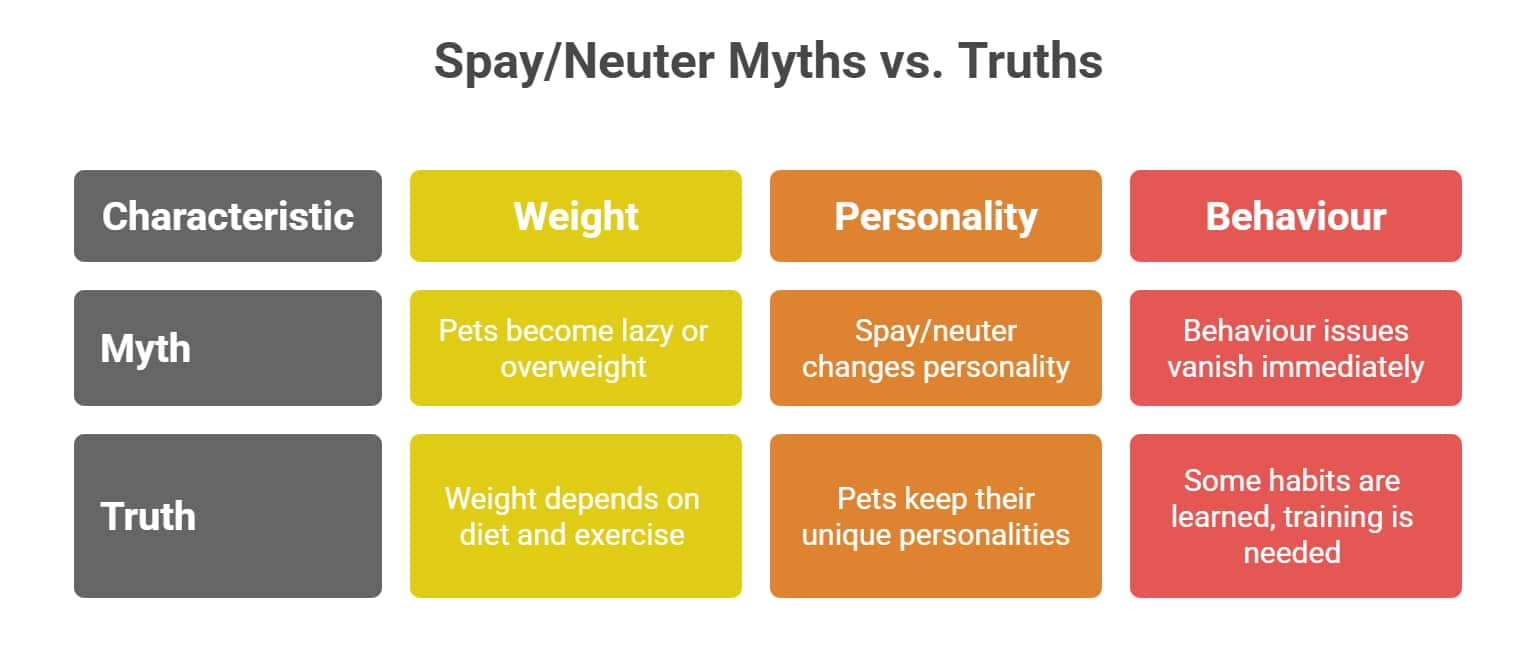
Can Spaying or Neutering Change a Cat’s Personality?
Concerns about cat personality change after spay are common among first-time pet owners.
Fortunately, sterilization does not usually change a cat’s fundamental temperament.
Affection, curiosity, and playfulness generally remain part of the animal’s personality.
However, hormone-driven behaviours may decrease. Female cats will no longer experience normal heat cycles after complete ovarian removal, while males may become less inclined to roam or urine-mark.
These changes are not guaranteed to eliminate established behavioural problems.
Nutrition should also be reviewed after surgery because energy requirements may change, increasing the risk of weight gain if feeding is not adjusted.
Affordable Cat Spaying and Neutering Programs in Vancouver
Veterinary care should be accessible whenever possible, especially for families managing tight household budgets.
The BC SPCA operates a Community Spay & Neuter Program that may help eligible low-income pet guardians cover part of their animal’s sterilization expenses.
Approved applicants receive a voucher contributing toward surgery costs, although some payment responsibility usually remains.
Eligibility depends on household income, age, the animal’s health, and program availability in the applicant’s community.
The BC SPCA also identifies a $15 municipal rebate in Burnaby for eligible cats that have been spayed or neutered.
Availability and application requirements should always be confirmed directly with the relevant organization.
Choosing a Trusted Veterinary Hospital in Vancouver
Veterinarians in Vancouver may offer different surgical packages, so choosing a clinic requires more than comparing advertised prices.
A reliable provider should clearly explain the proposed procedure, anesthesia monitoring, pain control, possible complications, and aftercare arrangements.
For families seeking the best vet clinic in Vancouver, Beach Avenue Animal Hospital is a featured local option offering professional surgical services and individualized veterinary care.
Located at 111-1000 Beach Avenue, Vancouver, the clinic provides spaying and neutering services alongside preventive healthcare and postoperative support.
As an established animal hospital in Vancouver, its team can assess your cat’s individual needs and provide a personalized surgical estimate.
Pet owners can also review the hospital’s article on Spaying Your Pet for additional information about preparing for a procedure.
For current prices and appointments, contact the clinic at 604-909-0636.
Practical Examples: Comparing Two Cat Surgery Estimates

Consider two hypothetical cases illustrating why veterinary estimates differ.
Example 1: A healthy five-month-old male kitten
A healthy male kitten has both testicles descended and requires a routine procedure.
The veterinary team completes the examination, plans anesthesia, performs surgery, and provides postoperative instructions.
With no unexpected findings, the final amount may remain close to the clinic’s quoted package price.
Example 2: An adult female cat requiring additional assessment
A four-year-old female cat is scheduled for spaying, but her medical history indicates a need for additional bloodwork.
The veterinarian may recommend diagnostic testing and a modified anesthetic plan before proceeding.
The total estimate could therefore exceed the advertised starting fee.
These scenarios are illustrative examples, not actual patient records or quotations from Beach Avenue Animal Hospital.
Conclusion
Understanding how much does it cost to neuter a cat involves looking beyond a single advertised price.
Male neutering is generally less expensive because the procedure is less invasive, while female spaying requires abdominal surgery and more extensive postoperative care.
Vancouver pet owners should compare complete written estimates, understand which safety measures are included, and discuss their cat’s individual health requirements with a veterinarian.
Choosing appropriate surgical care today can help prevent unplanned litters, reduce certain reproductive health risks, and support your cat’s long-term well-being.
Frequently Asked Questions
1. How much does neutering a cat cost in Vancouver?
Published starting fees at selected Vancouver clinics range from approximately $190 to $347 CAD for routine male neutering. Additional services and medical needs may increase the total.
2. Is female cat spaying more expensive than male neutering?
Yes. Female spaying generally costs more because it involves abdominal surgery, greater procedural complexity, and additional incision care.
3. Can I get my cat spayed or neutered for free in BC?
Some eligible households can access financial assistance through community programs. However, BC SPCA vouchers generally cover only part of the procedure’s cost.
4. How long does it take a cat to recover after neutering?
Many cats become alert within 24 hours, but healing takes longer. Depending on the surgery, activity restrictions may be recommended for approximately 7–14 days.