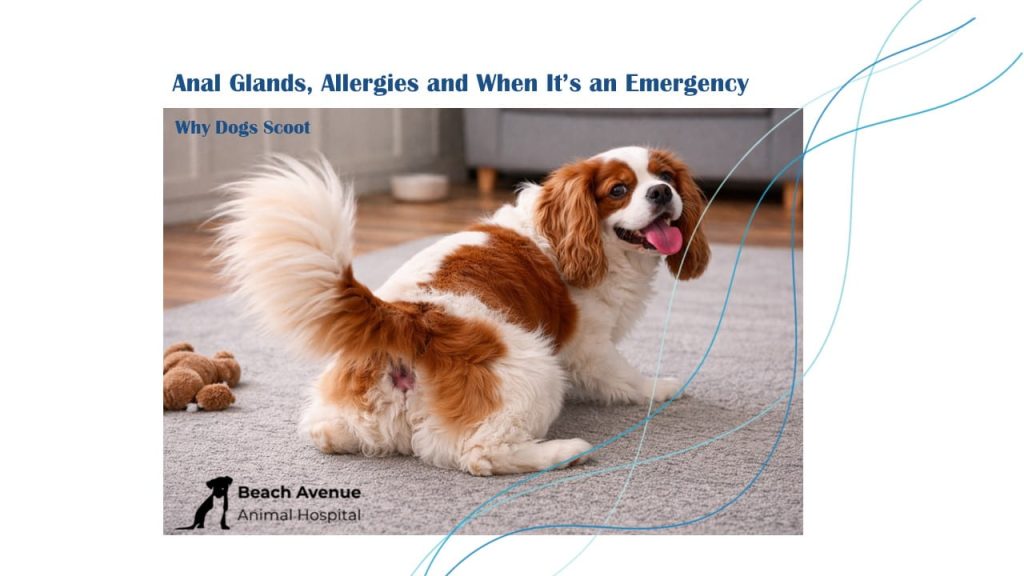
Seeing your dog drag their bottom across the floor can be alarming. Scooting is not a behavior problem, it is a symptom. While anal gland issues are the most common cause, scooting can also be linked to allergies, parasites or skin irritation. Understanding the underlying cause is essential to prevent discomfort and more serious complications.
The Most Common Causes of Scooting
1. Blocked Anal Glands
Dogs have two small anal glands located on either side of the rectum. These glands normally empty during bowel movements. When they become impacted or inflamed, pressure builds and causes irritation.
Common signs of blocked anal glands include:
• Scooting
• Licking or biting near the tail
• A fishy odor
• Swelling beside the anus
For a full explanation of symptoms and treatment options, see our guide on blocked anal glands in dogs.
2. Allergies and Skin Irritation
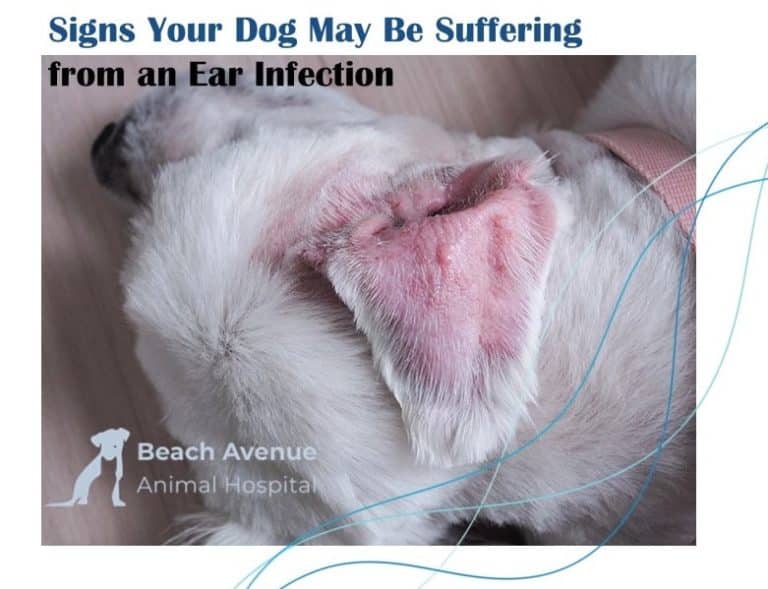
Food sensitivities or environmental allergies can cause itching around the tail and rear end. Dogs may scoot to relieve irritation.
You may also notice:
• Excessive scratching
• Red or inflamed skin
• Recurring ear infections
3. Intestinal Parasites
Worms can irritate the rectal area, especially in puppies. Regular deworming and veterinary exams help prevent this issue.
4. Digestive or Stool Issues
Soft stools may prevent natural emptying of the anal glands, leading to impaction over time.
Signs It’s Blocked Anal Glands
While occasional scooting may not indicate a serious problem, repeated scooting combined with any of the following often suggests anal gland impaction:
• Swelling near the anus
• Pain when sitting
• Crying during bowel movements
• Brown or bloody discharge
• Strong unpleasant odor
Without treatment, blocked glands can become infected or rupture.
According to the Merck Veterinary Manual, anal sac infections can progress to abscess formation if not treated promptly.
When Scooting Becomes an Emergency
Seek immediate veterinary evaluation if your dog shows:
• Severe swelling
• Bleeding
• Pus discharge
• Lethargy
• Fever
• Refusal to eat
An abscessed anal gland is painful and requires prompt medical treatment to prevent further infection.
Can You Express Anal Glands at Home?
Some pet owners attempt to express anal glands at home. External expression may provide temporary relief in mild cases, but improper technique can cause pain, tissue damage or worsen infection. Internal expression should only be performed by a trained veterinary professional.
If your dog is frequently scooting, professional evaluation is safer than repeated home attempts.
Cost of Anal Gland Expression and Treatment
The cost of anal gland expression varies depending on whether the issue is mild impaction or advanced infection. Routine expression is generally more affordable than treating an abscess, which may require medication, flushing or additional procedures.
Early treatment helps reduce discomfort and prevent more serious complications.
How Veterinarians Treat Recurring Anal Gland Problems
Treatment depends on severity:
• Manual expression
• Flushing of infected glands
• Antibiotics for infection
• Pain management
• Dietary adjustments to improve stool consistency
In rare cases of chronic recurrence, surgical options may be discussed.
Prevention Strategies
• Maintain healthy stool consistency through proper diet
• Regular veterinary exams
• Address allergies promptly
• Monitor for early signs of irritation
Early intervention prevents escalation into infection.
Frequently Asked Questions
Why does my dog scoot but not have blocked anal glands?
Scooting can also be caused by allergies, parasites, skin infections or digestive issues. A veterinary exam helps identify the exact cause.
How often do dogs need anal gland expression?
Some dogs never require manual expression, while others may need periodic care due to anatomy or recurring inflammation.
Can blocked anal glands go away on their own?
Mild impaction may occasionally resolve, but infection and swelling require veterinary treatment.
What happens if an anal gland ruptures?
A ruptured gland creates an open wound near the rectum and requires cleaning, medication and monitoring to prevent deeper infection.
Is scooting always painful?
Not always, but persistent scooting usually indicates irritation or pressure that should be evaluated.
About the Author
Dr. Omid Mavedati is a veterinarian at Beach Avenue Animal Hospital in Vancouver with experience in diagnosing and treating common pet health issues such as anal gland problems, allergies, infections, and digestive conditions. He focuses on clear communication and preventive care to help pets stay healthy and comfortable.
Learn more about Dr. Omid Mavedati on his LinkedIn profile.