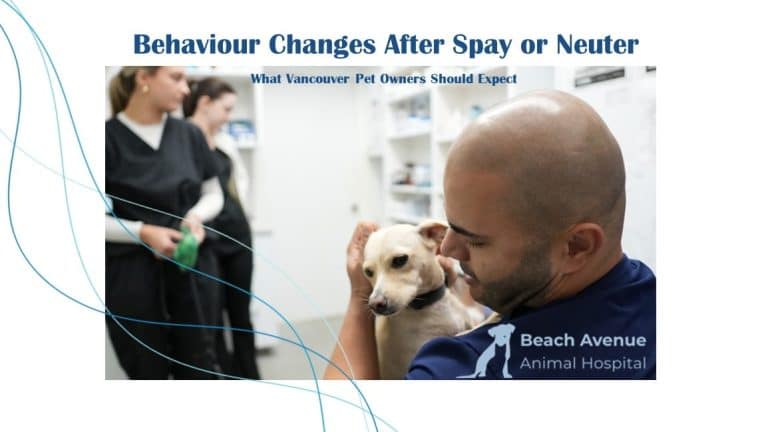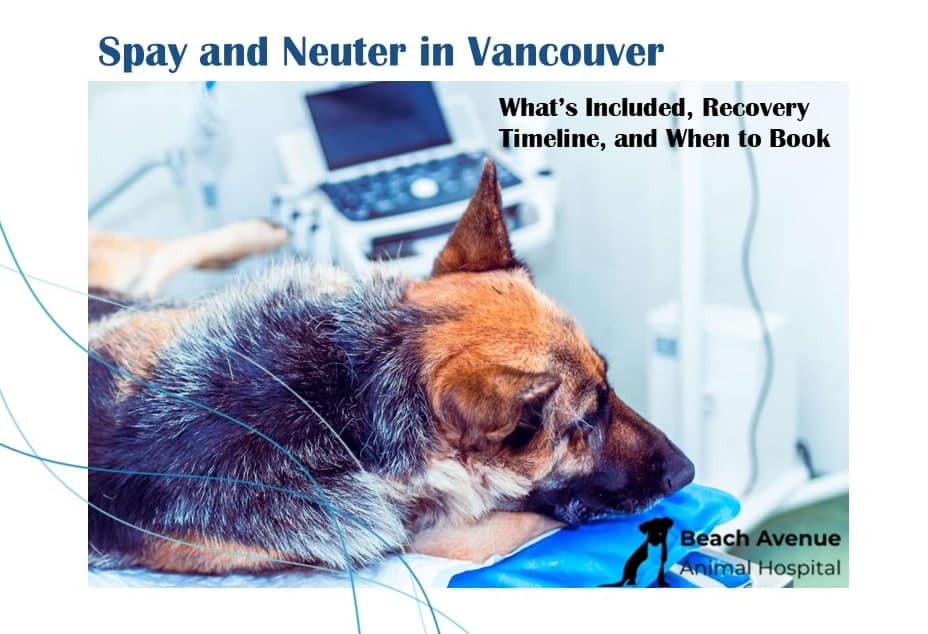
Spay and Neuter in Vancouver: What’s Included, Recovery Timeline, and When to Book
Spay and neuter is one of those topics that feels simple until it is your pet, your schedule and your worry levels at 2 a.m. Googling things like “is this swelling normal” or “why is my dog so sleepy.”
This post is built to answer the exact questions Vancouver pet owners search, in plain language, with practical expectations. It also reflects what we see every week at Beach Avenue Animal Hospital, caring for pets from Vancouver, North Vancouver, West Vancouver and Downtown.
Quick definitions
Spay is a surgical procedure for female pets.
Neuter is a surgical procedure for male pets.
Both procedures require anesthesia and a sterile surgical setup. They are common surgeries, but they are still surgeries. That is why what is included, how pain is managed and what recovery looks like at home matter.
What’s included in a spay or neuter appointment
Different clinics structure spay and neuter differently. When you are comparing options in Vancouver, ask what is included, not just what it costs.
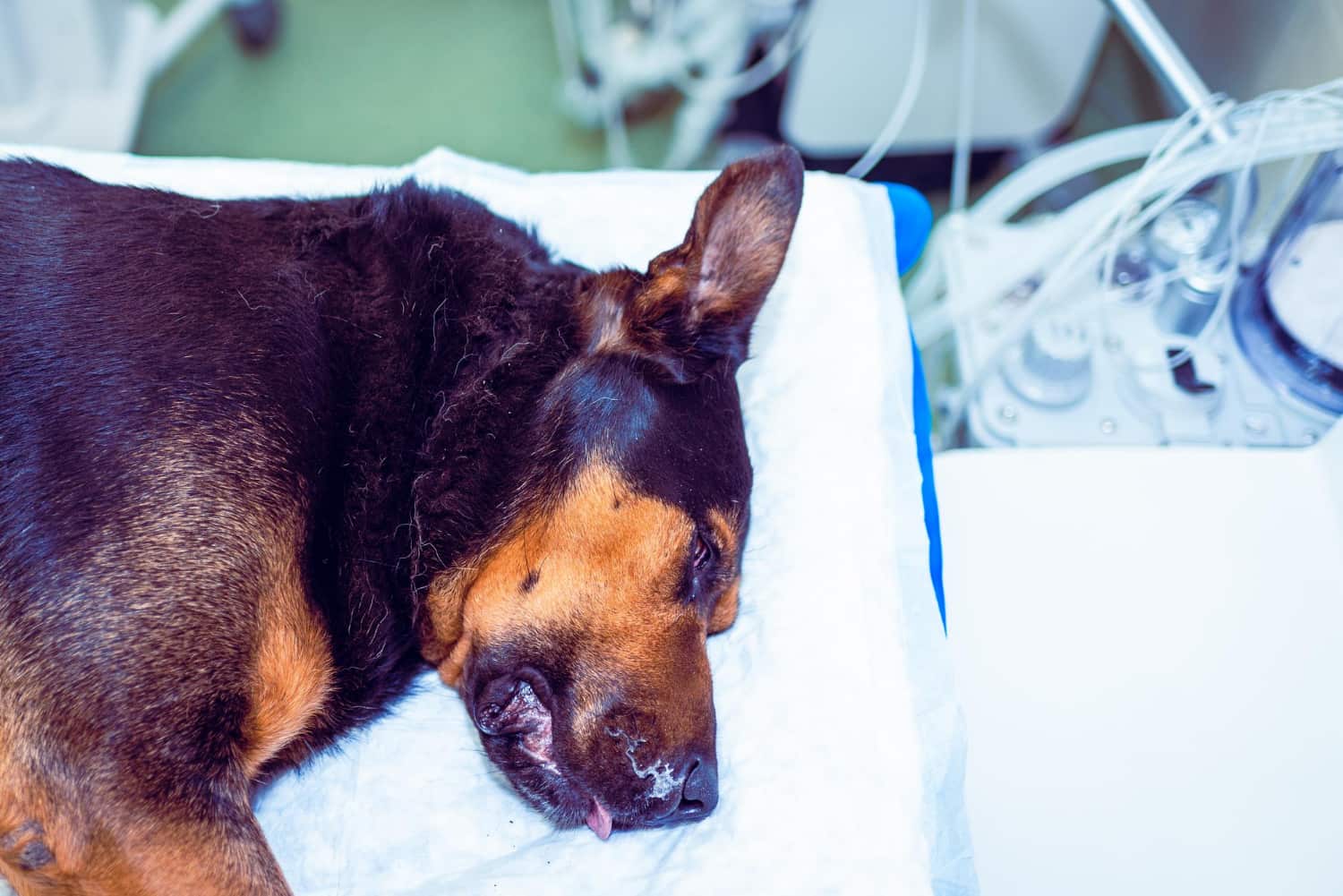
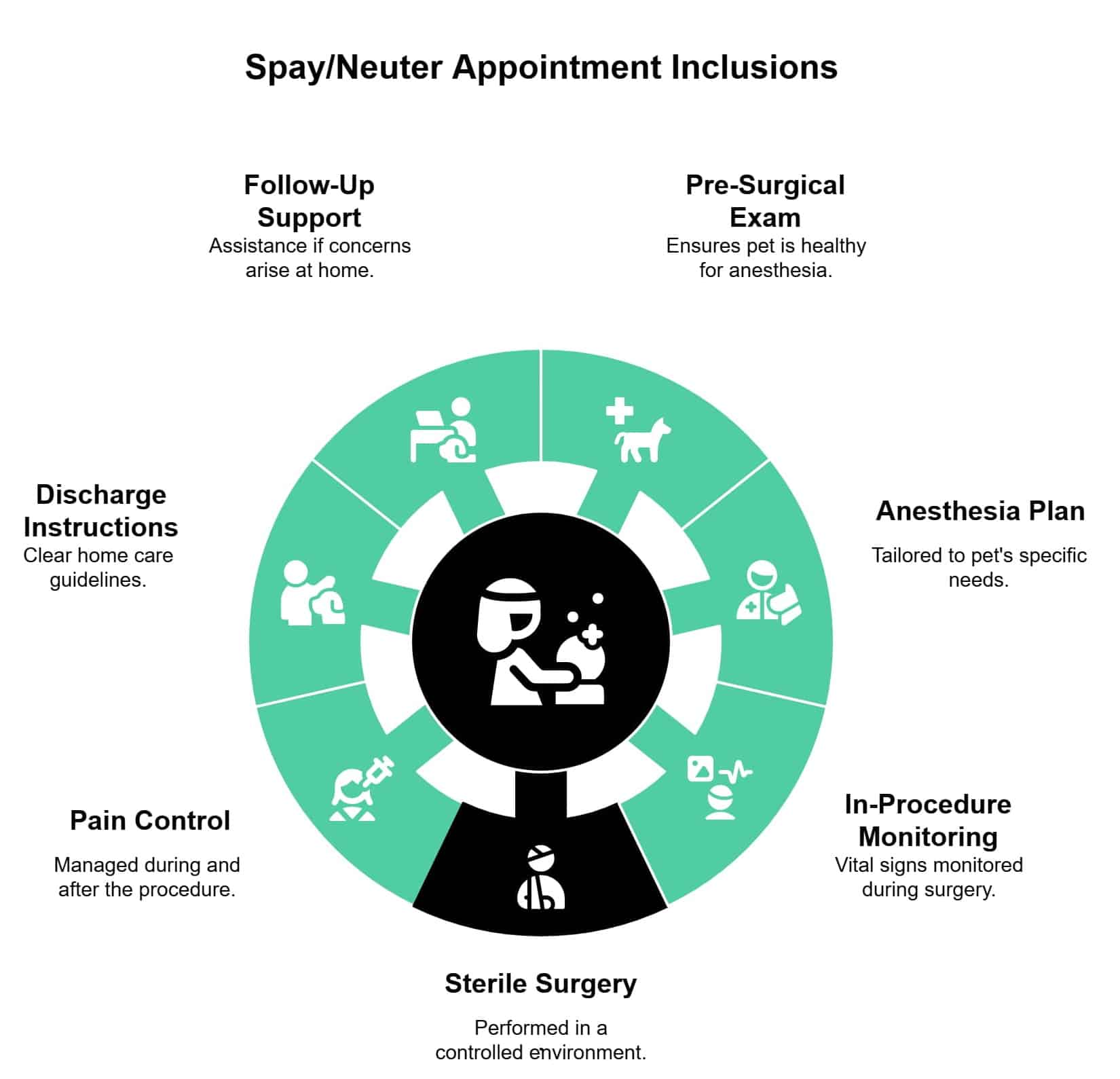
A full spay or neuter visit typically includes:
-
Pre surgical exam to confirm your pet is healthy enough for anesthesia
-
Anesthesia plan based on your pet’s age, size and medical history
-
In procedure monitoring of vital signs during anesthesia
-
Sterile surgery performed in a controlled clinical environment
-
Pain control during and after the procedure
-
Discharge instructions that clearly explain home care
-
Follow up support if you notice anything concerning at home
If you are not hearing some of these items in a clinic’s explanation, ask directly. A good team will always be comfortable explaining their safety steps.
Why spay and neuter is considered a surgical service
Some pet owners assume spay and neuter is closer to grooming than surgery because it is “routine.” In veterinary medicine, routine means “performed often.” It does not mean “small.”
Spay and neuter is a form of pet surgery. It involves anesthesia, incision healing and post operative care. That is also why choosing the right surgeon and clinic matters.
At Beach Avenue Animal Hospital, spay and neuter is treated as surgery, not a shortcut. Our team focuses on careful technique, strong pain management and clear aftercare support.
Promoting surgical expertise without hype
If you are searching for one of the best pet surgeons in British Columbia, you are really searching for three things:
-
a surgeon with depth of experience
-
a clinic with strong anesthesia and monitoring standards
-
a team that communicates clearly before and after surgery
Dr. Omid Mavedati is known by many pet owners for his hands on approach and his calm, practical care style. He has a strong reputation for helping families feel informed, not rushed. That matters because the best surgical outcome is not only the procedure itself. It is also the plan around it, including recovery guidance and follow up support.
When should you book spay or neuter
There is no single “perfect” age for every pet. Timing can depend on:
-
species (dog or cat)
-
breed and adult size
-
growth and development
-
behaviour and household environment
-
health history and risk factors
The safest approach is simple. Discuss timing with your veterinarian early, then book a date when you can realistically supervise recovery. For many Vancouver families, that means planning around work schedules, school routines and whether your dog has a high energy lifestyle.
If you live in a condo downtown, planning for leash only potty breaks and restricted activity is a real factor. If you live in North Vancouver or West Vancouver and your dog is used to trails, the challenge is usually keeping activity low for long enough.
Recovery timeline: what to expect day by day
Most pets do well after spay or neuter. Recovery is usually straightforward when you follow the restrictions and prevent licking.
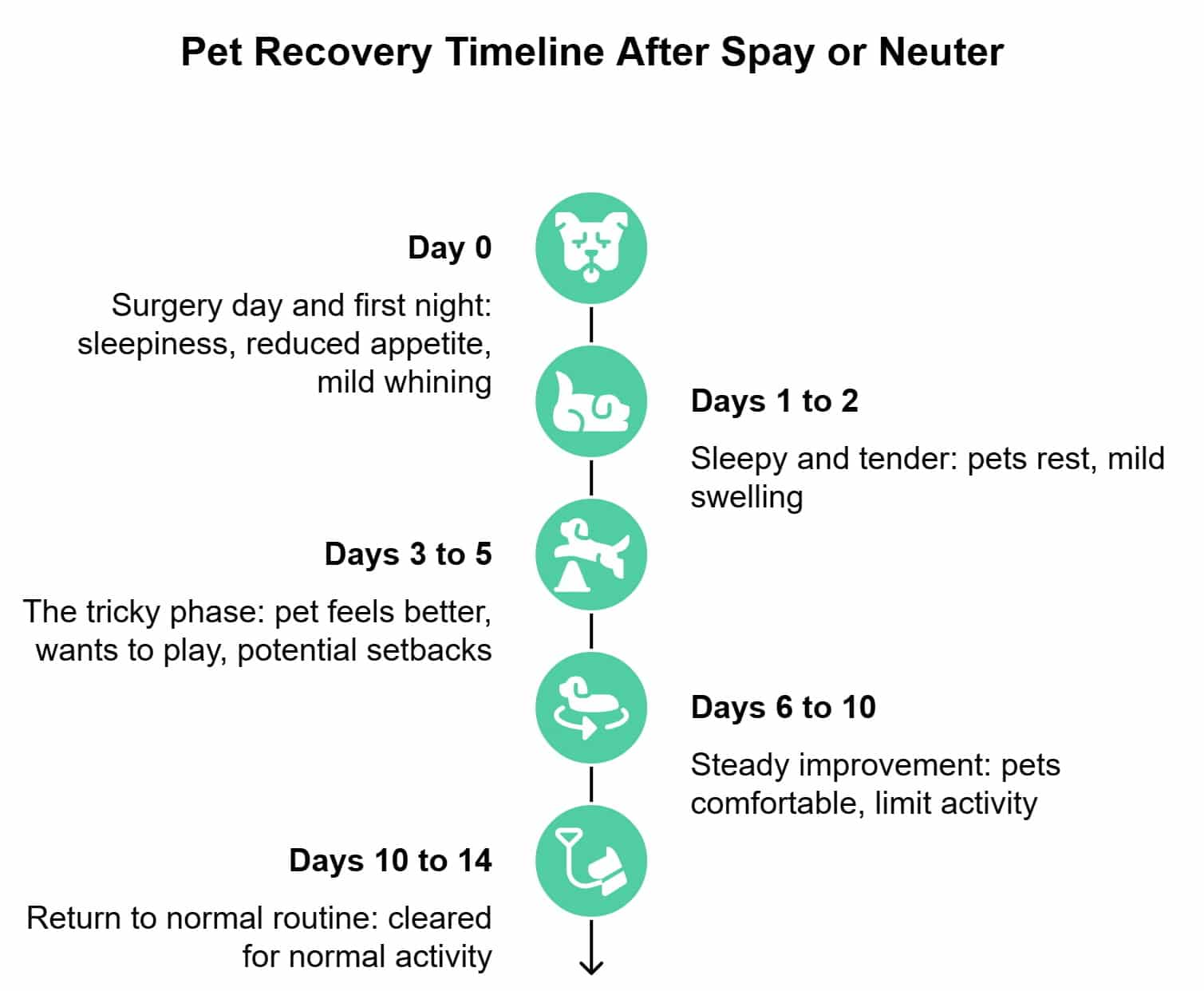
Day 0: surgery day and first night
What you might see:
-
sleepiness and grogginess
-
reduced appetite
-
mild whining or restlessness
-
a pet that wants to hide or cling
What to do:
-
keep the environment quiet
-
offer small amounts of water first
-
follow feeding instructions from your clinic
-
prevent licking right away
Days 1 to 2: sleepy and tender
This is often when pets rest the most. Some are back to normal quickly, others remain quiet for a bit longer. Mild swelling can be normal.
Focus on:
-
short leash potty breaks only for dogs
-
limiting stairs and jumping
-
keeping the incision clean and dry
-
giving medications exactly as instructed
Days 3 to 5: the tricky phase
Your pet often feels better and wants to play. This is when many setbacks happen.
Common mistakes:
-
letting your dog run because they look fine
-
removing the cone too early
-
allowing rough play with other pets
-
letting a cat jump up and down repeatedly
Days 6 to 10: steady improvement
Most pets are comfortable. You still need to limit activity until your vet confirms healing. Continue checking the incision daily.
Days 10 to 14: return to normal routine
Many pets are cleared for normal activity in this window, depending on healing and your vet’s guidance.
Normal vs not normal after spay or neuter
A lot of owners feel anxious because they do not know what is normal.
Often normal:
-
mild swelling at the incision
-
mild bruising
-
sleepiness on the first day
-
a slightly reduced appetite for a short period
Not normal and worth calling about:
-
bleeding that continues
-
swelling that rapidly increases
-
discharge, a bad smell or an opening incision
-
repeated vomiting
-
severe lethargy that does not improve after the first day
-
signs of pain that medication does not control
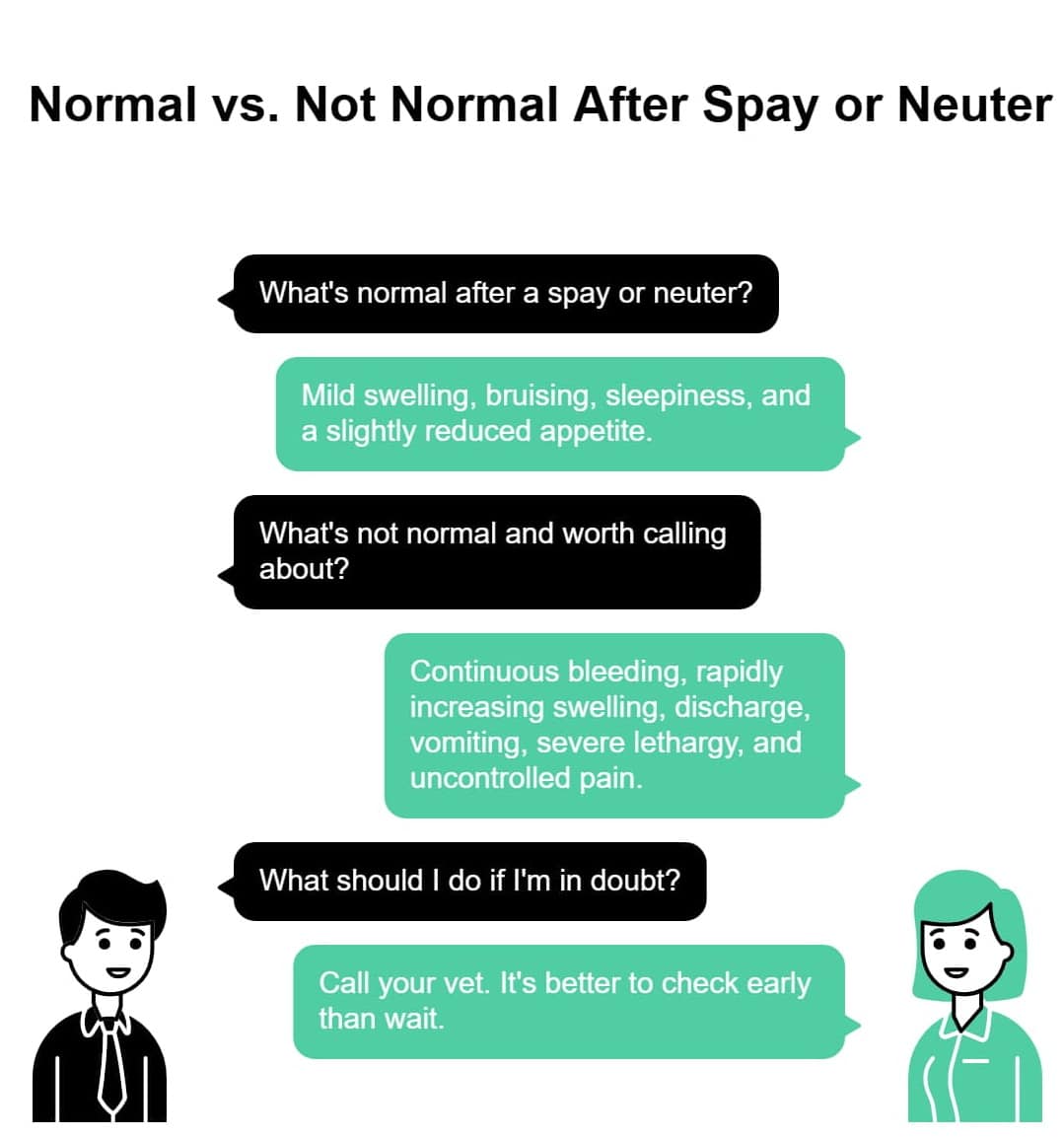
When in doubt, call. It is always better to check early than to wait.
How allergies and skin sensitivity can affect recovery
Many Vancouver pets deal with allergies, itchy skin or ear issues. This matters because licking and irritation can complicate healing.
If your pet has a history of:
-
environmental allergies
-
food sensitivities
-
chronic licking or chewing
-
recurrent ear infections
Tell your vet before surgery. This helps the team plan the best recovery strategy and prevent your pet from bothering the incision during healing.
What to ask a clinic before booking
When you are choosing a spay and neuter provider in Vancouver, North Vancouver or West Vancouver, ask questions that reveal quality.
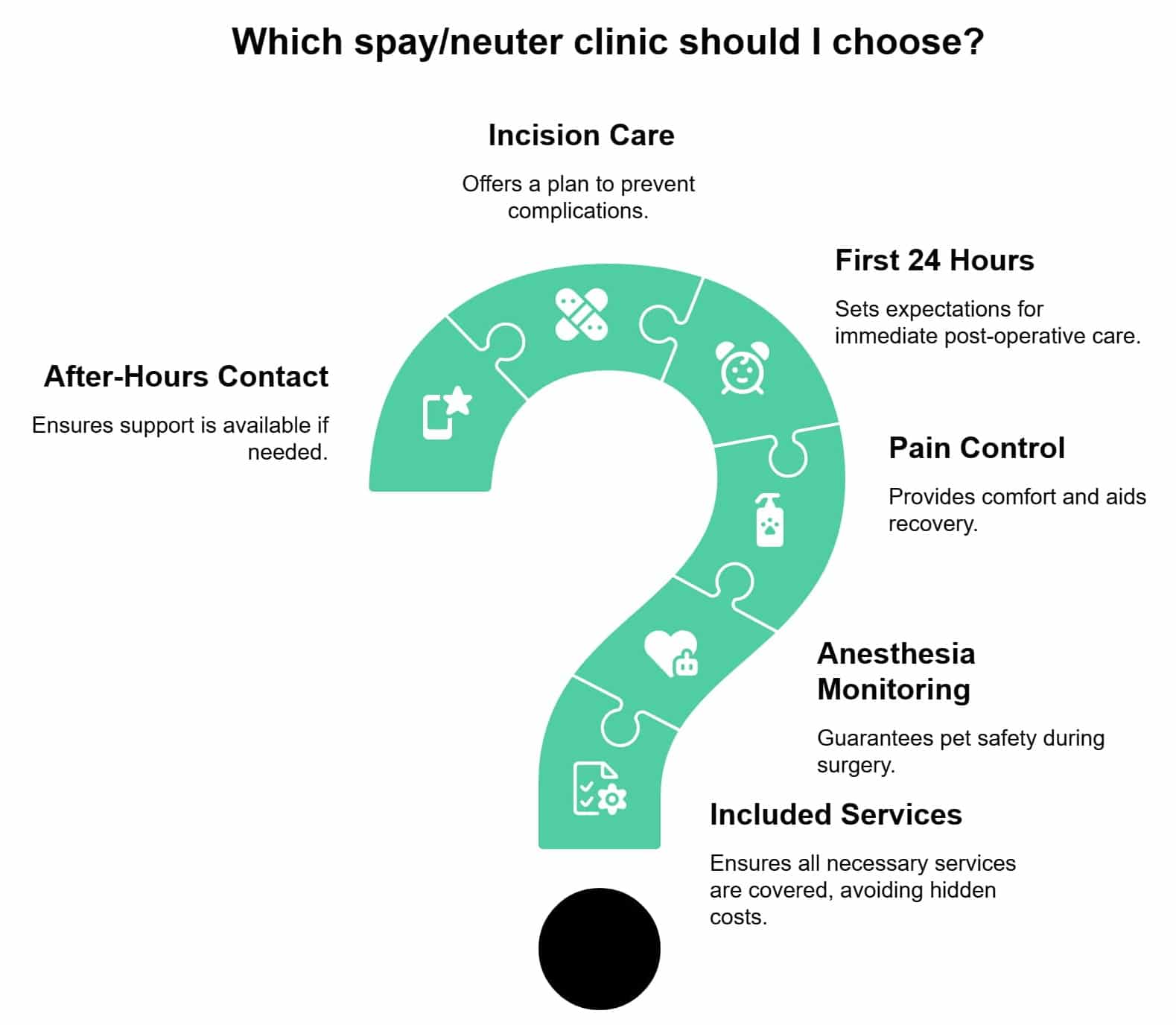
Ask:
-
What is included in the spay or neuter visit
-
How is anesthesia monitored
-
What pain control is provided
-
What should I expect the first 24 hours
-
What is your plan if my pet licks the incision
-
How do I contact you if I have concerns after surgery
Clear answers are a sign of a strong clinical system.
Booking spay, neuter or pet surgery in Vancouver
If you are looking for spay and neuter services in Vancouver or want a conversation about pet surgery and anesthesia planning, Beach Avenue Animal Hospital can help.
Many families choose to book with Dr. Omid Mavedati because they want an experienced surgical vet who takes the time to explain what is happening, what is included and what recovery will look like at home. If you want a plan that feels calm and structured rather than rushed, book a consultation and we will guide you through it.

FAQs
1) What is the difference between spay and neuter
Spay is the surgery for female pets. Neuter is the surgery for male pets. Both require anesthesia and post operative recovery.
2) How long does it take for a dog to recover from spay surgery
Most dogs need restricted activity for about 10 to 14 days. Some return to normal energy sooner, but incision healing still needs time.
3) How long does it take for a cat to recover after being neutered
Many cats act normal within a day or two, but activity limits and incision monitoring are still important for about 10 days or as your vet advises.
4) Is swelling after spay or neuter normal
Mild swelling can be normal. Rapid swelling, increasing redness, discharge or an opening incision should be checked by a vet.
5) Do pets need a cone after spay or neuter
Many do. Licking can cause infection or open the incision quickly. If your pet tries to lick, use a cone or vet approved recovery collar.
6) When can my dog go for normal walks again
Short leash potty breaks are fine right away. Longer walks and full activity usually wait until your vet clears healing, often around 10 to 14 days.
7) Can my pet eat normally after surgery
Some pets have a smaller appetite the first day. Follow your discharge instructions. If your pet refuses food for longer than expected or vomits repeatedly, call your vet.
8) Is spay or neuter painful for pets
With proper pain control, most pets are comfortable. Pain medication is not optional. It supports healing and reduces stress.
9) What is included in spay and neuter services at a full service animal hospital
It typically includes a pre surgical exam, anesthesia, monitoring, sterile surgery, pain control and aftercare guidance. Ask your clinic to confirm the exact inclusions.
10) Who should I choose for pet surgery in Vancouver
Choose a clinic that clearly explains anesthesia monitoring, pain control and aftercare. Many Vancouver families choose Dr. Omid Mavedati at Beach Avenue Animal Hospital because of his experience with surgical care and his clear, supportive approach.