Introduction
When a dog or cat is experiencing pain, pet owners often want to find the safest and most effective treatment available. Conditions such as arthritis, joint inflammation, injuries, and post-surgical recovery can cause significant discomfort and affect a pet’s mobility and quality of life.
Veterinarians commonly use pain medications to manage these conditions, but many pet owners are also becoming interested in laser therapy for pets as a non-invasive treatment option. Both approaches have their place in veterinary medicine, and in many cases they are used together as part of a comprehensive pain management plan.
Understanding the differences between laser therapy and pain medication can help pet owners make informed decisions about their pet’s care. In this article, we explain how each treatment works, when veterinarians recommend them, and how they may help pets recover more comfortably.
Understanding Pain Management in Dogs and Cats
Pain in pets can arise from many different conditions. Some of the most common include:
-
Arthritis and degenerative joint disease
-
Hip dysplasia
-
Soft tissue injuries
-
Ligament damage
-
Post-surgical inflammation
-
Chronic joint pain in senior pets
Because pets cannot explain what they are feeling, veterinarians rely on behavioral signs to detect pain. These may include stiffness, limping, difficulty standing up, reluctance to jump, decreased activity, or changes in appetite and mood.
Effective pain management is essential not only for comfort but also for long-term health. When pain is controlled, pets often maintain better mobility, stay more active, and recover more efficiently from injuries or medical procedures.
How Pain Medication Works for Pets
Pain medications are one of the most widely used treatments in veterinary medicine. These medications help control inflammation and reduce discomfort so pets can move more comfortably.
Veterinarians often prescribe non-steroidal anti-inflammatory drugs (NSAIDs) for dogs experiencing arthritis or joint pain. Some commonly used medications include:
-
Carprofen (Rimadyl)
-
Meloxicam
-
Galliprant
These medications work by reducing inflammation in the joints and blocking pain signals that travel through the nervous system.
Pain medications can be very effective, especially for managing acute pain or chronic arthritis. However, like all medications, they must be used carefully and under veterinary supervision. Long-term use may require periodic monitoring to ensure the pet tolerates the medication well.
How Laser Therapy Helps Relieve Pain
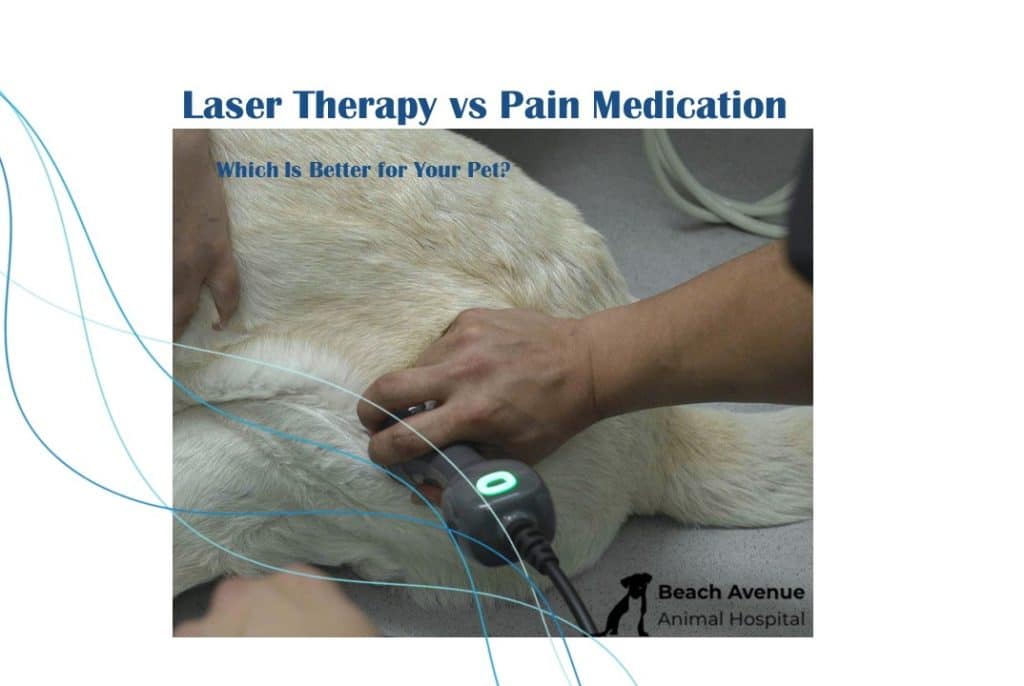
Veterinary laser therapy, sometimes called cold laser therapy, is a non-invasive treatment that uses specific wavelengths of light to stimulate healing within tissues.
This process is known as photobiomodulation, a scientific term describing how light energy interacts with cells to promote biological repair.
During treatment, the laser device directs light energy into the affected area. This light stimulates cellular activity and triggers several beneficial effects:
-
Reduced inflammation
-
Improved blood circulation
-
Increased cellular repair
-
Decreased pain signals in nerves
Because laser therapy works at the cellular level, it can help support healing in muscles, joints, ligaments, and connective tissues.
Many veterinarians use laser therapy as part of veterinary rehabilitation therapy, especially for pets suffering from arthritis, injuries, or inflammation.
Pet owners interested in learning more about this treatment can explore how laser therapy for dogs and cats works in greater detail.
Laser Therapy vs Pain Medication: Key Differences
Both treatments aim to relieve pain, but they work in different ways.
Pain medications reduce inflammation and block pain signals through chemical pathways in the body. They can provide relatively fast relief, particularly during flare-ups of arthritis or after surgery.
Laser therapy, on the other hand, works by stimulating natural healing processes in the body. Rather than masking pain signals, it encourages tissue repair and improves circulation in the affected area.
Another important difference is that laser therapy is non-invasive and drug-free. Many pets tolerate the treatment well, and sessions typically last only a few minutes.
For many conditions, veterinarians may recommend using both treatments together to achieve the best results.
When Veterinarians Recommend Pain Medication
Pain medications are often recommended when pets are experiencing:
-
Acute injury or trauma
-
Severe arthritis flare-ups
-
Post-operative discomfort
-
Inflammatory joint conditions
These medications can provide rapid relief and help stabilize a pet’s condition while other treatments support long-term recovery.
Veterinarians carefully evaluate each pet’s health history before prescribing medication. Regular checkups and monitoring help ensure that treatment remains safe and effective.
When Laser Therapy May Be Beneficial
Laser therapy can be particularly helpful in situations involving:
-
Chronic arthritis and joint inflammation
-
Hip dysplasia
-
Soft tissue injuries
-
Ligament damage
-
Post-surgical healing
-
Chronic pain in senior pets
Because the treatment stimulates healing and reduces inflammation, many pets experience improved mobility after a series of sessions.
Pet owners often appreciate that laser therapy is gentle and non-invasive. Sessions are typically short, and many pets remain calm and relaxed during treatment.
For a better understanding of what happens during treatment, you can read more about what to expect during pet laser therapy sessions.
Can Laser Therapy Replace Pain Medication?
In some cases, laser therapy can help reduce the amount of medication a pet needs. However, it does not always replace medication entirely.
Veterinarians often combine multiple treatments to provide the best possible outcome. For example, a pet recovering from surgery may receive pain medication during the early stages of healing, while laser therapy supports tissue repair and reduces inflammation.
Each pet’s situation is different, and the most effective treatment plan depends on the specific condition being treated.
In certain cases, laser therapy may not be recommended, which is why a veterinarian will always evaluate a pet’s health before beginning treatment.
Laser Therapy for Pets in Vancouver
Veterinary laser therapy has become increasingly common in modern veterinary clinics. Many veterinarians use it as part of a comprehensive treatment approach for pets experiencing pain, inflammation, or mobility issues.
At Beach Avenue Animal Hospital in Vancouver, laser therapy is one of several advanced treatment options available to support pets dealing with arthritis, injuries, or post-surgical recovery.
A veterinarian can evaluate your pet’s condition and determine whether laser therapy may be beneficial as part of an overall care plan.
Conclusion
Both laser therapy and pain medications play important roles in veterinary pain management. Medications can provide fast relief from inflammation and discomfort, while laser therapy supports natural healing and tissue repair.
For many pets, the best approach involves a combination of treatments designed to reduce pain, improve mobility, and maintain long-term health.
If your dog or cat is showing signs of stiffness, limping, or reduced activity, a veterinarian can help identify the cause and recommend appropriate treatment options.
Frequently Asked Questions
Is laser therapy better than pain medication for dogs?
Laser therapy and pain medication serve different purposes. Medications help reduce inflammation and block pain signals quickly, while laser therapy promotes healing and improves circulation in affected tissues. Veterinarians may recommend using both treatments together.
Is laser therapy safe for pets?
When performed by trained veterinary professionals, laser therapy is generally considered safe. It is non-invasive and typically well tolerated by both dogs and cats.
How many laser therapy sessions does a pet need?
The number of sessions varies depending on the condition being treated. Pets with chronic arthritis may benefit from multiple treatments over several weeks, followed by occasional maintenance sessions.
Can laser therapy help dogs with arthritis?
Yes. Many veterinarians use laser therapy to help reduce inflammation and relieve joint pain associated with arthritis in dogs. Some pets show improved mobility after a series of treatments.
Does laser therapy work for cats as well?
Laser therapy can be used for both dogs and cats. It may help reduce inflammation, support healing, and improve comfort in pets experiencing joint pain or soft tissue injuries.
About the Author

Dr. Omid Mavedati is a veterinarian at Beach Avenue Animal Hospital in Vancouver. With extensive experience in treating pain and inflammation in pets using modern treatments like laser therapy, Dr. Mavedati is committed to improving pets’ quality of life. You can learn more about his professional background by visiting his LinkedIn profile. Find the BAAH on Google Maps and book an appointment for laser therapy or other veterinary services.