Your dog is scooting, licking around their tail, or suddenly yelping when they sit down — and now there is a painful, swollen lump near the anus, or worse, an open wound. This may be an anal gland abscess: a painful infection of one of the small glands beside the anus. It is distressing to see and it hurts your dog, but it is treatable — and the sooner it is seen by a vet, the better the outcome.
In this guide, we explain what an anal gland abscess is, how to recognize it, what a vet does to treat it, what to do while you wait for the vet if the abscess has burst, and how to prevent it happening again. Never squeeze or lance an abscess at home — that can make it far worse.
Quick Answer
An anal gland abscess in dogs is a painful, infected swelling beside the anus, caused by a blocked anal gland that has become infected and filled with pus. Signs include scooting, licking or biting at the tail area, a red or swollen lump near the anus, pain when sitting or pooping, and sometimes a bad smell or discharge. If it ruptures, it leaves an open, bleeding wound. A ruptured anal gland abscess needs urgent vet care — never squeeze or lance it at home. Treatment is by a vet, who drains and cleans the abscess and prescribes what your dog needs. If your dog is in pain, cannot sit or poop, or has a fever, book a vet visit right away.
What Is an Anal Gland Abscess in Dogs?
Dogs have two small anal glands (also called anal sacs) sitting just inside the anus, one on each side. These glands produce a strong-smelling fluid that is normally released during bowel movements. When a gland does not empty properly, the fluid builds up and thickens. The gland becomes impacted (blocked), bacteria multiply in the trapped fluid, and an infection develops. As pus builds up inside, the gland swells and becomes very painful — this is an anal gland abscess.
Left alone, the pressure can cause the abscess to rupture through the skin, leaving an open wound beside the anus that drains pus and blood. This is painful and needs urgent vet care, but it is actually a common way the problem is found — owners often notice a wound or discharge in a dog that was scooting or licking a few days before. For more background on how the glands work, see our guide on anal glands in dogs, and note that anal glands in cats can cause similar problems in cats too.
Signs of an Anal Gland Abscess
Anal gland problems develop in stages. The table below shows how to tell the difference.
| Stage | What it looks like | How the dog behaves |
|---|---|---|
| Blocked (impacted) | No lump yet; the area may look normal | Scooting, licking or biting around the tail; chasing the tail |
| Infected | Mild swelling or redness beside the anus; the area may feel warm | More scooting and licking; discomfort when sitting; a fishy smell |
| Abscessed | A painful, hot, red, swollen lump beside the anus | Yelping when touched, obvious pain, straining or difficulty pooping; may have a fever or seem unwell |
| Ruptured | An open, bleeding wound beside the anus with pus or bloody discharge | Pain and licking of the wound; relief after it bursts, then soreness |
Other signs include a sudden fishy smell that was not there before, a dog that will not sit down or sits gingerly, blood on the stool or on bedding, and swelling on one side of the anus only. If you notice any of these, check the area gently — do not press on it — and call your vet.
What Causes an Anal Gland Abscess?
An abscess is the end stage of a gland that could not empty. Common reasons include:
- Soft stools or diarrhoea — firm stools press on the glands and empty them; soft stools do not, so fluid builds up.
- Obesity — overweight dogs have more fatty tissue around the glands, which can block the ducts.
- Allergies and skin disease — inflammation can narrow the gland ducts and make blockages more likely.
- Breed and anatomy — small and toy breeds, and some larger breeds, are more prone to anal gland problems.
- Past anal gland problems — a dog that has had one impaction is more likely to have another.
- Low-fibre diets — too little fibre can mean stools that are too soft to empty the glands.
Scooting is often the earliest warning sign. Read our post on why dogs scoot to learn what else scooting can mean — but a dog that scoots for more than a day or two should be checked by a vet before a blocked gland turns into an abscess.
What Does a Vet Do for an Anal Gland Abscess?
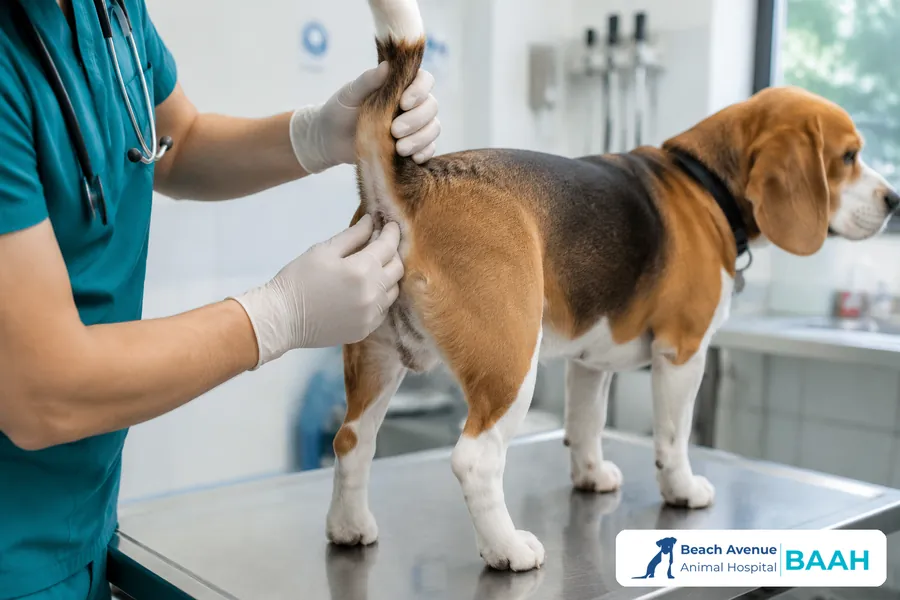
A vet will examine the area, often feel the glands from inside and outside, and confirm whether it is an abscess and whether it has ruptured. Treatment depends on what is found, but it usually involves:
- Emptying and draining the gland — the vet drains the abscess, which relieves the pressure and pain. This is done carefully, under pain relief or sedation if needed.
- Cleaning and flushing — the abscess is cleaned and flushed to remove pus and help it heal from the inside out.
- Prescription treatment — your vet will prescribe what your dog needs, which may include antibiotics and pain relief. Never give your dog medicines at home unless your vet has prescribed them.
- An Elizabethan collar (cone) — to stop your dog licking the wound, which would slow healing and spread infection.
- A recheck — your vet will usually want to see your dog again in a few days to check the wound is healing.
Most dogs recover well with prompt treatment. If abscesses keep returning, your vet may discuss longer-term options, including diet changes, regular dog anal gland expression as part of a vet-guided plan, or — in rare, severe cases — surgical removal of the gland. Surgery is only considered when other approaches have failed.
What to Do While You Wait for the Vet (Ruptured Abscess)
Warning: a ruptured anal gland abscess needs urgent vet care. Home care is not treatment — it only helps while you wait for the vet.
If the abscess has burst and you cannot get to a vet immediately, do this:
- Stay calm and stop the licking — put a cone on your dog if you have one, or keep them from reaching the area. Licking spreads infection and stops the wound healing.
- Keep the wound clean — gently dab the area with a clean, damp cloth or sterile gauze. Do not scrub and do not use hydrogen peroxide, alcohol, vinegar, essential oils or human creams.
- Apply a warm compress — a clean cloth soaked in warm (not hot) water, held gently against the area for 5–10 minutes, can soothe the pain and help it drain. Do this a few times a day if your dog allows it.
- Keep the bedding clean — put your dog on clean towels or bedding so the open wound stays as clean as possible.
- Call the vet — describe what you see and ask how soon your dog can be seen. If the wound is bleeding heavily, your dog has a fever or is very unwell, go to an emergency vet now.
Never squeeze, press, lance or try to drain an abscess at home. Squeezing pushes infection deeper, causes severe pain, and can spread the infection into surrounding tissue. Do not give your dog painkillers, antibiotics or any other medicine from home — human medicines can be dangerous for dogs, and the wrong treatment can make the abscess worse.
Recovery and Aftercare
After the vet has drained and treated the abscess, healing usually takes one to two weeks. To help your dog recover:
- Keep the cone on until your vet says it can come off — even if your dog hates it.
- Give all prescribed medicines exactly as directed, and finish the full course.
- Keep the area clean and dry, and check the wound daily for spreading redness, swelling or new discharge.
- Keep your dog calm and on short lead walks for a few days; avoid baths, swimming and rough play until the wound has healed.
- Feed a good diet and keep stools firm — your vet may suggest a fibre supplement if soft stools were part of the problem.
- Go to the recheck appointment, even if your dog looks better — the vet needs to confirm the gland is fully healed.
When Is an Anal Gland Abscess an Emergency?
An anal gland abscess is urgent in most cases, and an emergency if your dog:
- Has an abscess that has burst and is bleeding heavily
- Cannot sit, stand or poop because of the pain
- Has a fever, is lethargic, or stops eating and drinking
- Has swelling that is spreading, or red streaks on the skin
- Has had the wound for more than a day without vet care and it is getting worse
If you are unsure, call the clinic and describe the wound. A ruptured abscess should be seen the same day — do not wait for a routine appointment.
How Much Does Anal Gland Abscess Treatment Cost?
The cost depends on how severe the abscess is, whether it has ruptured, whether sedation is needed, and what follow-up care is required. That is why we do not publish a fixed price for abscess treatment: the exact cost depends on the exam and what your dog needs. After an exam, your vet will explain the options and the cost before anything is done. Call (778) 760-0000 to confirm current pricing and to ask what an anal gland abscess visit involves.
How to Prevent Anal Gland Abscesses
Abscesses cannot always be prevented, but these steps help:
- Keep stools firm — feed a complete, balanced diet with enough fibre; ask your vet about a fibre supplement if your dog has soft stools.
- Keep your dog at a healthy weight — obesity is a risk factor for anal gland problems.
- Watch for early signs — scooting, tail chasing and licking around the anus are worth a vet check before they turn into a blockage.
- Do not express the glands yourself — incorrect expression can injure the gland. If your dog needs regular expression, have it done by a vet or trained professional.
- Treat allergies and skin problems — these can narrow the gland ducts and make blockages more likely.
- Book regular vet checks — a vet can feel the glands and catch a blockage early.
Anal Gland Abscess? Visit Beach Avenue Animal Hospital in Vancouver
If your dog is scooting, licking around their tail, or has a painful lump or wound near the anus, we can help. Beach Avenue Animal Hospital is located in downtown Vancouver, and our team can examine your dog, drain and treat the abscess, and put a plan in place to stop it coming back. Call (778) 760-0000 to book an appointment — and if the abscess has burst, contact us the same day.
Conclusion
An anal gland abscess in dogs is painful and worrying, but it is very treatable when it is seen early. Watch for scooting, licking, a fishy smell, pain or a swollen lump near the anus — and get your dog to the vet before the gland bursts. Never squeeze or lance an abscess at home, and never give home medicines. If the abscess has ruptured, keep your dog from licking, keep the wound clean, use a warm compress, and get to the vet the same day. With prompt treatment and a few simple prevention steps, most dogs recover well and never have another abscess.
Frequently Asked Questions
1. What is an anal gland abscess in dogs?
An anal gland abscess is an infected, pus-filled swelling beside the anus, caused by a blocked anal gland that became infected. Dogs have two anal glands, one on each side of the anus. When a gland cannot empty, fluid builds up, bacteria multiply, and the gland becomes swollen and painful. If untreated, it can burst through the skin.
2. How do I know if my dog has an anal gland abscess?
Look for scooting, licking or biting around the tail, a red or swollen lump beside the anus, pain when sitting or pooping, a fishy smell, or discharge. A dog that suddenly yelps when you touch near the tail, or will not sit down, may have an abscess. If the lump has burst, you will see an open, bleeding wound with pus.
3. What should I do if my dog’s anal gland abscess bursts?
A ruptured anal gland abscess needs urgent vet care. While you wait, stop your dog from licking the wound (use a cone), dab the area gently with a clean damp cloth, use a warm compress for 5–10 minutes, and keep the bedding clean. Do not squeeze, press or lance the abscess, and do not apply creams or give medicines at home. Call the vet the same day.
4. Can I treat my dog’s anal gland abscess at home?
No — an abscess cannot be treated at home. Home steps like a warm compress and keeping the wound clean only help while you wait for the vet. The abscess needs draining, cleaning and prescription treatment by a vet. Never squeeze or lance an abscess at home, and never give your dog human painkillers or antibiotics.
5. How long does an anal gland abscess take to heal?
After vet treatment, most anal gland abscesses heal within one to two weeks if the wound is kept clean and your dog wears a cone to stop licking. Your vet will usually book a recheck to confirm the gland has healed. Dogs with a history of anal gland problems may need ongoing monitoring.
6. Can anal gland abscesses happen in cats?
Yes — cats have anal glands too and can develop impactions and abscesses, though it is less common than in dogs. Cat anal gland abscess signs include scooting, licking around the tail, pain and a lump or wound near the anus. Cats with these signs should also be seen by a vet promptly.
7. Why does my dog keep getting anal gland abscesses?
Repeat abscesses usually mean the glands keep blocking — often because of soft stools, obesity, allergies or a narrow gland duct. Your vet can look for the cause, adjust the diet (for example, adding fibre to firm up stools), and discuss whether regular vet-guided expression or, in rare cases, surgery is needed.
8. Is an anal gland abscess an emergency?
It is urgent and should be seen the same day, especially if it has ruptured. It is an emergency if the wound is bleeding heavily, your dog cannot sit or poop, has a fever, is very lethargic, or the swelling is spreading. If you are unsure, call the clinic and describe what you see.