Has your normally tidy cat started leaving a wet spot beside the box, on the rug, or on the bed? Cat peeing outside the litter box is frustrating, but it should not be dismissed as bad behaviour. Searches for a vet clinic near me, veterinarians Vancouver, Signs of Pain in Cats, Why Is My Cat Drinking So Much Water, and signs of a sick pet often start with this single change at home. This guide explains the medical and environmental reasons behind inappropriate urination, the urgent signs that need same-day care, and practical ways to make the litter box easier to use.
Whether people describe it as cat peeing outside litter box, cat peeing outside litter, cat peeing outside the box, or cat peeing outside of litter box, the message is the same: a cat’s toileting routine has changed. Treat it as a health clue first, then improve the home setup after medical causes have been considered.
Video Reference
Why This Matters for Canadian Cat Families
The Canadian Animal Health Institute’s latest survey, based on 2024 data and released in 2025, estimated 8.2 million pet cats in Canada. It also found that cats averaged about one veterinary visit each year, making an unexpected litter-box change a good reason not to wait for the next routine appointment.
| What you notice | What it may mean | Best next step |
| Small, frequent urine spots | Bladder pain, inflammation, infection, or stones | Veterinary exam and urinalysis |
| Straining with little or no urine | Possible urinary blockage, especially in males | Emergency veterinary care |
| Large puddles plus more drinking | Kidney disease, diabetes, or another systemic concern | Prompt urine and blood tests |
| Small urine amounts on vertical surfaces | Possible marking, though illness must be ruled out | Review stressors after a vet assessment |
Cats do not usually abandon a preferred box without a reason. They may be uncomfortable, unable to reach the box quickly, worried about another pet, or unhappy with the box itself.
Medical Causes of a Cat Peeing Outside the Litter Box
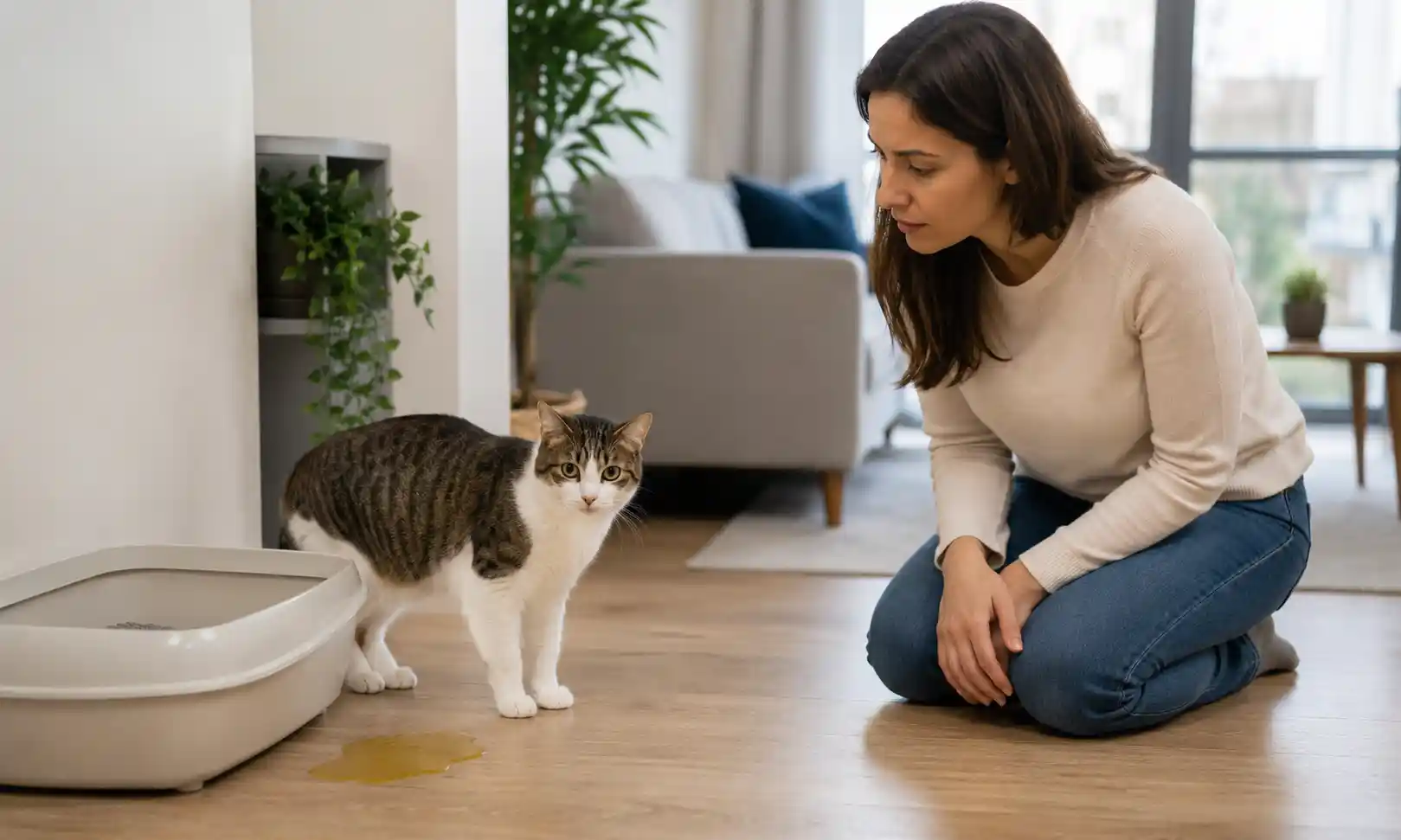
The question “why is my cat peeing outside of the litter box?” can have more than one answer. The cause may involve the bladder, kidneys, hormones, joints, or pain elsewhere in the body. That is why a veterinary examination should come before changing litter brands or buying a new box.
Feline Lower Urinary Tract Disease
Feline lower urinary tract disease, or FLUTD, is a broad term for bladder and urethral problems. Signs can include frequent trips to the box, straining, crying, blood in urine, genital licking, and urinating in inappropriate places.
A veterinarian may consider bladder inflammation, crystals, stones, infection, or obstruction. Feline idiopathic cystitis, also called FIC, is one painful inflammatory condition that may flare during stressful periods even when infection is not found.
A cat peeing outside litter box but acting normal can still be uncomfortable. Cats often show subtle signs, so urine testing can reveal information that behaviour alone cannot.
Kidney Disease, Diabetes, and Increased Urine Volume
Larger urine puddles combined with increased drinking can point to a different problem from lower urinary tract pain. Kidney disease and diabetes are among the conditions a veterinarian may consider, especially in older cats.
Cats with chronic kidney disease may drink and urinate more because their kidneys lose the ability to concentrate urine.
That is why an old cat peeing outside litter box may need both urine testing and blood work. A senior cat peeing outside litter box may also have arthritis, reduced mobility, or vision changes that make a high-sided box difficult to use.
Blood, Pain, and Mixed Litter-Box Changes
If you see cat peeing blood outside litter box, contact a veterinarian promptly. Blood can occur with inflammation, stones, infection, or other urinary conditions.
Likewise, cat peeing and pooping outside the litter box may involve more than one issue. Painful urination can occur alongside constipation, diarrhea, mobility pain, fear of a box location, or a learned aversion.
A sudden cat peeing and pooping outside litter box problem should be documented with notes about both urine and stool changes.
Male Cat Peeing Outside Litter Box: Know the Emergency Signs
A male cat peeing outside litter box requires extra urgency because male cats have a longer, narrower urethra and can develop an obstruction. Repeated unsuccessful attempts to urinate, crying, lethargy, reduced appetite, vomiting, and hiding are serious warning signs.
A complete obstruction can cause dangerous toxin buildup within roughly 36 to 48 hours and may become fatal within about 72 hours without treatment.
Do not assume a cat is constipated or “just stressed” if he is repeatedly visiting the box with little or no urine.
Seek Emergency Care Now When You See:
- Repeated straining with no visible urine, or only drops.
- Crying, restlessness, or frequent box visits.
- Vomiting, collapse, a painful-looking abdomen, or marked lethargy.
- A male cat who hides and will not eat after urinary signs begin.
A female cat peeing outside litter box can also be painful or ill and needs timely care. However, the obstruction risk makes a male cat with little or no urine an emergency.
Is It Urination, Spraying, or a Litter-Box Aversion?
Normal urination usually leaves a larger amount on a horizontal surface. Marking often involves smaller amounts on upright areas such as walls, doors, or furniture, although it can occasionally happen on horizontal surfaces too.
Marking is not a reason to skip the veterinary visit. A cat may mark because of new pets, visible outdoor cats, household conflict, or a routine change. Medical discomfort can also lead a cat to avoid the box and develop a preference for a carpet, bathmat, or quiet corner.
If your cat is peeing outside litter box, note the surface, urine amount, water intake, frequency of box visits, and any recent changes at home. These details help separate possible urinary disease, marking, and environmental stress.
Cat Keeps Peeing Outside of Litter Box: Improve the Setup
Once medical problems have been ruled out or are being treated, the litter-box environment matters. A box may be dirty, cramped, noisy, hard to reach, or controlled by another cat.
The baseline is one litter box per cat, plus one extra, placed in more than one location. The Feline Veterinary Medical Association advises spreading boxes through accessible areas rather than lining them up in one place.
Build a Better Litter Area
- Add enough boxes: Two cats generally need three boxes in separate areas.
- Scoop daily: Some multi-cat homes need more frequent cleaning.
- Choose quiet access: Avoid busy hallways, laundry appliances, and dead-end corners.
- Use gentle litter: Many cats prefer unscented, fine-textured litter. Make changes gradually.
- Use a larger box: An open box with easy entry works well for many cats.
In a Vancouver condo, a single laundry-room box may suit people but not a cat. Noise, closed doors, limited space, and a poor escape route can turn a once-acceptable location into a stressful one.
Stress Can Affect the Bladder, Not Just Behaviour
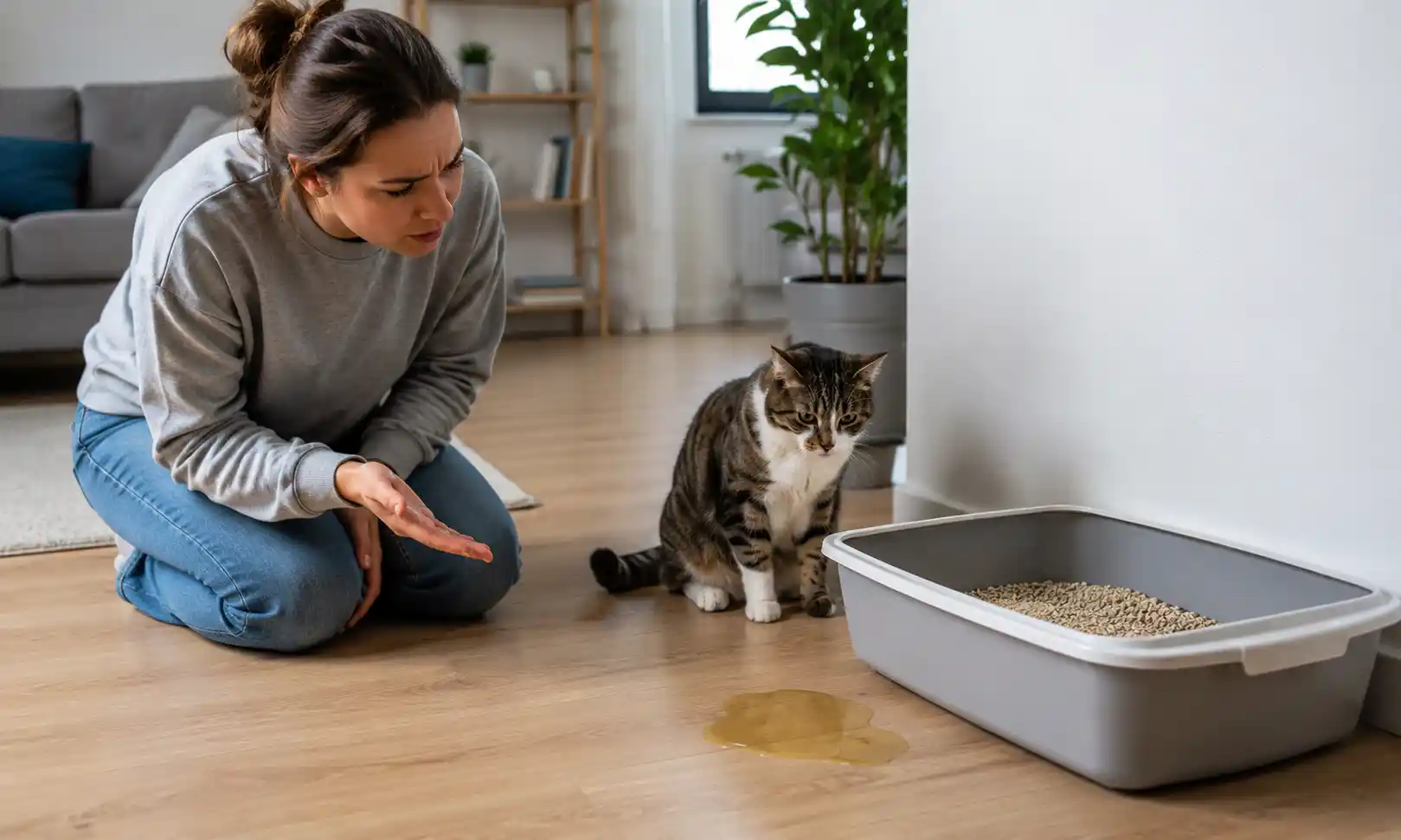
Stress can be linked to real bladder inflammation and pain, especially in cats with FIC. Common triggers include moving, renovations, visitors, a new animal, conflict between cats, or sudden changes in an owner’s work schedule.
For example, a cat that begins urinating beside the box during a renovation may be responding to noise, unfamiliar smells, or a moved box. Another may choose the bathtub after a second cat blocks the path to the litter area.
Supportive changes include predictable feeding and playtimes, separate food and water stations, vertical resting spaces, hiding areas, and gradual introductions between pets. Rather than punishing accidents, focus on identifying the cause and reducing pressure around the litter area.
Senior Cats Need a Different Plan
An old cat peeing outside litter box may be unable to climb over a high rim or walk downstairs quickly. Cornell notes that joint pain can make entering and leaving a box difficult, and a low-sided or cut-out box may help.
Place a low-entry box close to where an older cat sleeps. Add non-slip flooring nearby and avoid putting every box in the basement.
This is why cats peeing outside of litter box in their senior years should not be labelled stubborn. Pain, kidney disease, diabetes, constipation, and confusion can all contribute.
What a Veterinary Visit May Include
When people search cat peeing outside litterbox, they often want a quick home fix. The safer first step is a focused assessment. Depending on the history and examination, your veterinarian may recommend:
- A physical examination, including hydration, abdominal comfort, body weight, and mobility.
- Urinalysis to assess urine concentration, blood, crystals, glucose, and other findings.
- Urine culture when infection is suspected.
- Blood tests for kidney disease, diabetes, thyroid disease, or other systemic concerns.
- X-rays or ultrasound if stones or structural concerns are possible.
A tailored plan prevents the common mistake of treating every urinary problem as a UTI, when inflammation, stones, stress, or mobility changes may need different care.
A Practical 48-Hour Plan for Vancouver Cat Owners
When a cat keeps peeing outside of litter box, act early:
- Check for emergency signs. Straining, little or no urine, crying, vomiting, or lethargy means urgent care, especially for a male cat.
- Book an exam. A new toileting change deserves a medical conversation, even when your cat seems comfortable.
- Take notes. Track urine amount, box visits, water intake, appetite, and recent household changes.
- Add a clean box today. Use an open, easy-entry box in a quiet area with unscented litter.
- Clean accidents well. Use an enzymatic pet-urine cleaner according to its directions.
- Reduce pressure. Keep other pets away from the litter area and maintain calm routines.
For people asking “why is my cat peeing outside litter box?”, veterinary assessment plus environmental adjustment is more effective than changing several things at random.
When to Contact Beach Avenue Animal Hospital
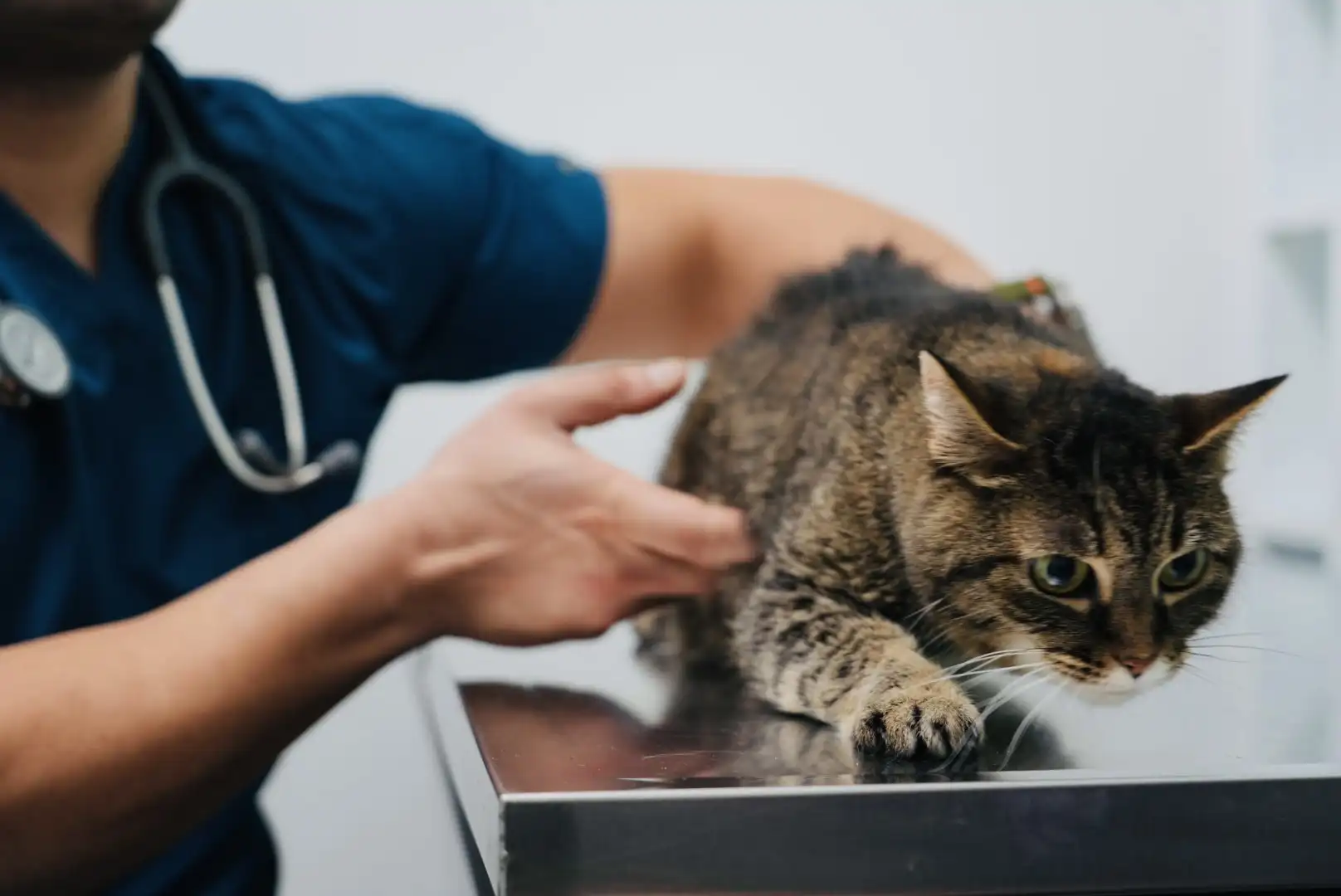
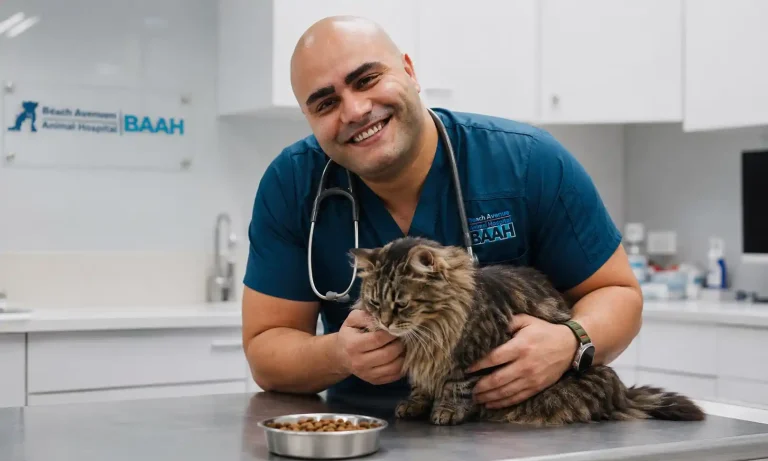
A sudden toilet-habit change can be an early warning sign. For Vancouver cat families, Beach Avenue Animal Hospital is a best vet clinic in Vancouver for assessing litter-box changes with a medical-first, compassionate approach.
Bring a simple timeline, a list of food and medications, and observations about water intake or household changes. That information helps the team decide whether urine testing, blood work, imaging, pain management, or environmental changes should come next.
Final Takeaway
A cat does not urinate outside the box out of spite. It is usually a signal of pain, urgency, stress, limited access, or a problem with the box setup.
In short, start with a veterinary examination, watch closely for male-cat emergency signs, and then create a quiet, clean, easy-to-reach litter area. Early action can protect your cat’s comfort and make the problem easier to resolve.
FAQs
Is my cat peeing outside the box out of spite?
No. Cats do not usually urinate outside the box for revenge. Pain, urgency, stress, poor access, or a litter preference problem is more likely.
How many litter boxes should I have?
Use the one-per-cat-plus-one guideline. For two cats, provide three boxes in separate, quiet, accessible areas.
Can stress alone cause a cat to pee outside the litter box?
Yes. Stress can contribute to bladder inflammation and box avoidance. Medical causes should still be checked first.
My cat is peeing outside the litter box but acting normal. Should I still see a vet?
Yes. A change in litter-box use can be the first visible sign of urinary pain, kidney disease, diabetes, or another concern.
When is a male cat peeing outside the litter box an emergency?
It is urgent when he strains, produces little or no urine, cries in the box, vomits, hides, or becomes lethargic. A urinary blockage can become life-threatening quickly.