If your dog keeps scratching at their ears or shaking their head, an ear infection is one of the most common causes, and the first question most owners ask is whether it is yeast or bacteria. The answer matters, because the two are treated differently. But the signs overlap a lot, and both can be present at the same time, so symptoms alone cannot tell you which one your dog has. Only an ear swab looked at under the microscope can.
At Beach Avenue Animal Hospital in Vancouver’s West End, we see ear infections every week. This dog ear infection yeast vs bacterial guide explains what each type looks like, how your vet tells them apart, and when to book an exam.
What Causes Yeast and Bacterial Ear Infections in Dogs
The first difference between the two is the cause. Yeast infections are usually caused by Malassezia, a yeast that normally lives on healthy skin in small numbers. It overgrows when the ear canal stays warm and moist: after swimming, in floppy-eared breeds, or when allergies inflame the skin inside the ear.
Bacterial infections are usually caused by Staphylococcus or Pseudomonas bacteria, and they often follow a yeast infection, an allergy flare-up, or an ear that has stayed damp for too long. Allergies are the most common underlying cause: VCA notes they are involved in as many as 43% of ear infection cases. Dogs with skin allergies are prone to both, which is why recurring ear infections are often a pet dermatology problem as much as an ear problem.
Yeast vs Bacterial Ear Infection: How to Tell the Difference
The table below sets out the dog ear infection yeast vs bacterial differences, sign by sign. Remember these are patterns, not proof — a yeast infection can look bacterial and the other way around, and mixed infections (yeast and bacteria together) are common.
| Sign | Yeast infection | Bacterial infection |
|---|---|---|
| Discharge | Dark brown, waxy, thick | Yellow or light brown; green or pus-like in severe cases |
| Smell | Sweet, musty, or bread-like | Foul or strong, sometimes sharp |
| Itching | Often intense; head shaking and scratching | Moderate to severe; the ear may be painful to touch |
| Redness | Red, inflamed ear canal; skin may look thickened over time | Red and swollen; the ear may feel hot |
| Onset | Often gradual, recurring | Can come on quickly, sometimes after a yeast infection |
If your dog’s ear looks red and sore, read our guide to hot and red ears for what that can mean — and what to do first.
Symptoms of an Ear Infection in Dogs
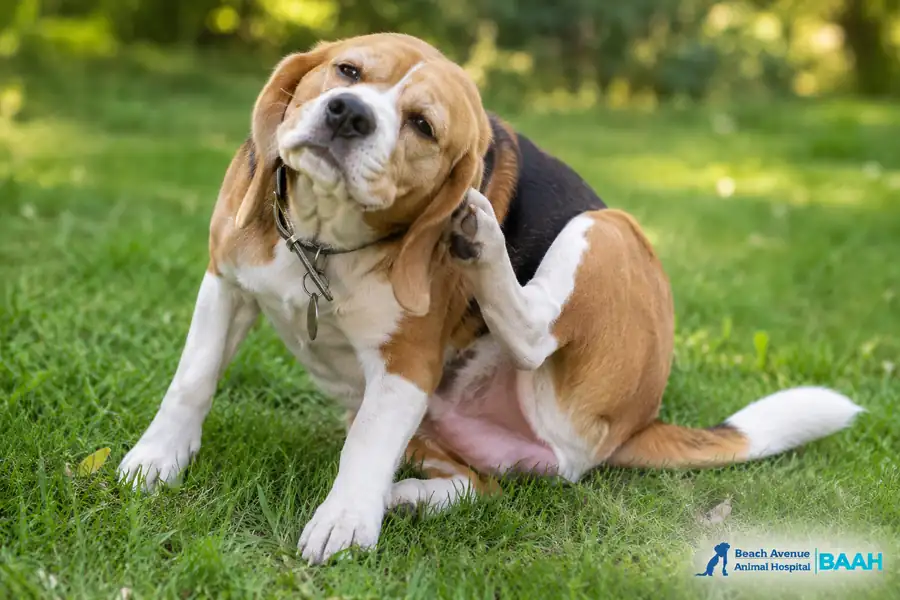
The most common symptoms of an ear infection in dogs are head shaking, scratching at one or both ears, redness inside the ear flap, a smell from the ear, discharge, and sensitivity when you touch the ear. Some dogs rub their head along the floor or tilt their head to one side. If the infection has been going on for a while, the ear canal can swell and the skin can thicken. For the full list of warning signs, see our guide to the signs of an ear infection in dogs.
One thing not to do: don’t put anything in your dog’s ear — drops, oils, or home cleaners — before the cause is known. The wrong product can irritate an inflamed ear, push debris deeper, or hide the real problem from your vet.
How Your Vet Diagnoses the Cause
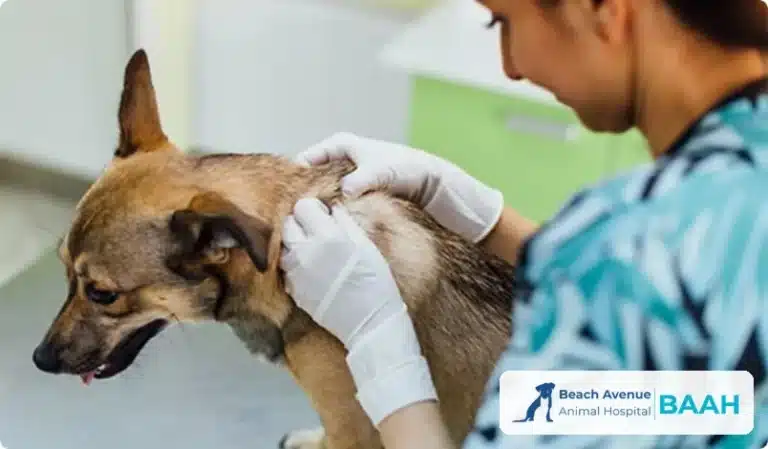
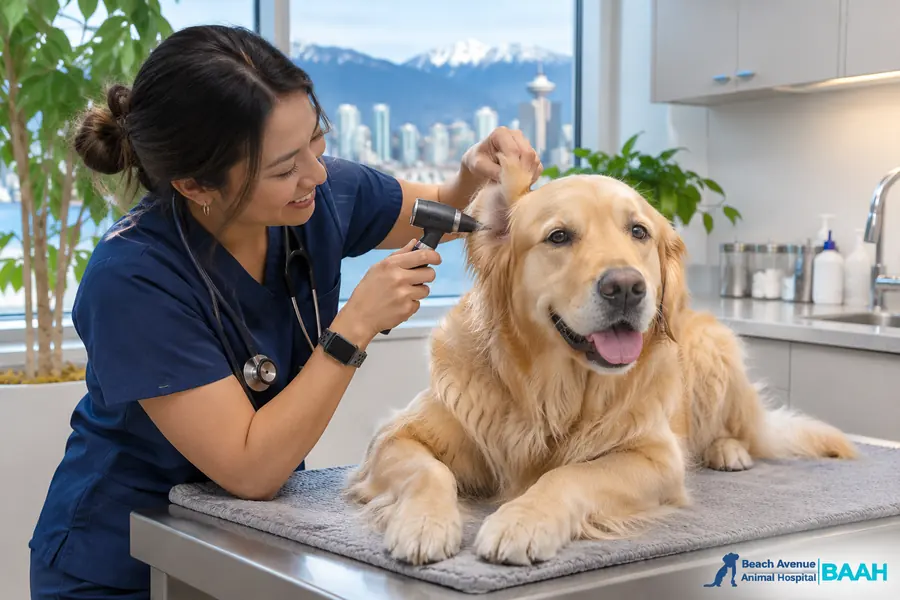
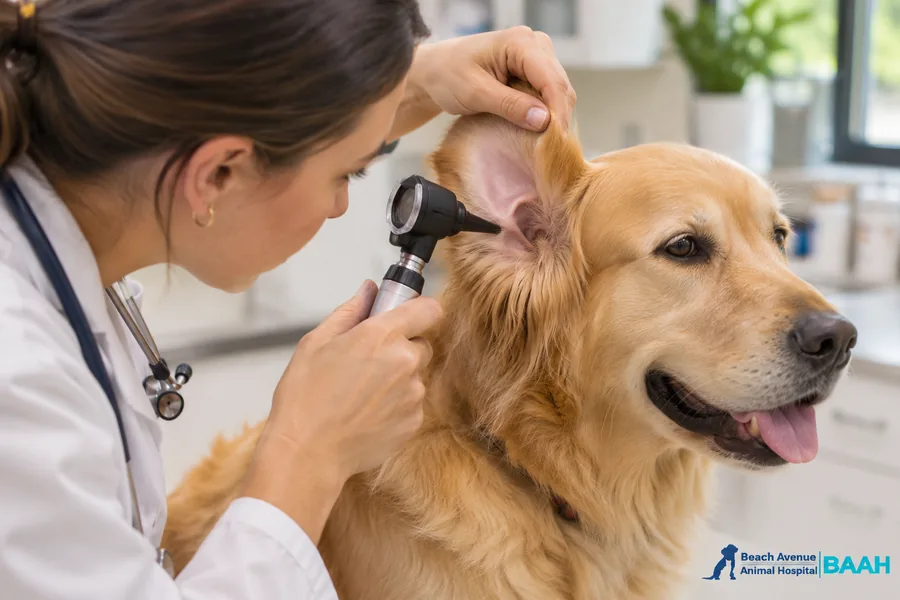
Diagnosis starts with an ear exam using an otoscope, which lets your vet see the ear canal and eardrum. Then comes the test that actually answers the yeast-or-bacteria question: ear cytology. Your vet takes a gentle swab from the ear canal, stains it, and looks at it under the microscope. Yeast cells and bacteria look completely different under the microscope, so cytology usually gives a clear answer on the same visit — and it shows whether both are present. Our in-house pet diagnostics mean most dogs get an answer and a treatment plan at the first appointment. For severe or recurring infections, your vet may also send a sample for culture and susceptibility testing. That identifies the exact microorganisms involved and shows which medication will work against them.
Treatment: Why the Cause Decides the Drops
Treatment depends on what the swab shows. Yeast infections are treated with antifungal ear medication; bacterial infections with antibiotic ear medication; mixed infections need a combination. Your vet may also clean the ear canal first, because discharge blocks medication from reaching the infection. Some dogs need an ear flush under sedation if the canal is very painful or full of debris. The exact treatment — and the cost — depends on what the exam finds, so we never quote a final price before seeing your pet. What we can tell you: a first exam at our West End clinic starts from $89, and we will explain the plan and the cost before anything is done.
Never use leftover ear drops from a previous infection, and never use human ear products on your dog. The wrong medication can make the infection worse or mask it while it spreads deeper into the ear.
Which Dogs Get Ear Infections Most Often
Any dog can get an ear infection, but some are more prone than others. VCA notes that breeds with large, floppy, or hairy ears, such as cocker spaniels, miniature poodles, and Old English sheepdogs, are more likely to develop them, because their ear canals trap warmth and moisture. Dogs who swim often, dogs with allergies, and puppies and kittens, who are more prone to ear mites, also get ear infections more often. If your dog is in one of these groups, a quick ear check every week or two helps you catch redness, smell, or discharge early, before it becomes painful.
When to See a Vet
Book an exam if your dog is shaking their head or scratching their ears for more than a day, if you can see discharge or smell something from the ear, or if the ear looks red, swollen, or painful. Come in sooner — the same day if you can — if your dog seems in pain, is off their food, is tilting their head, or has balance problems, because those signs can mean the infection is spreading. Call us at (778) 784-7959 and we will tell you straight away whether we can see your pet today.
Preventing Ear Infections
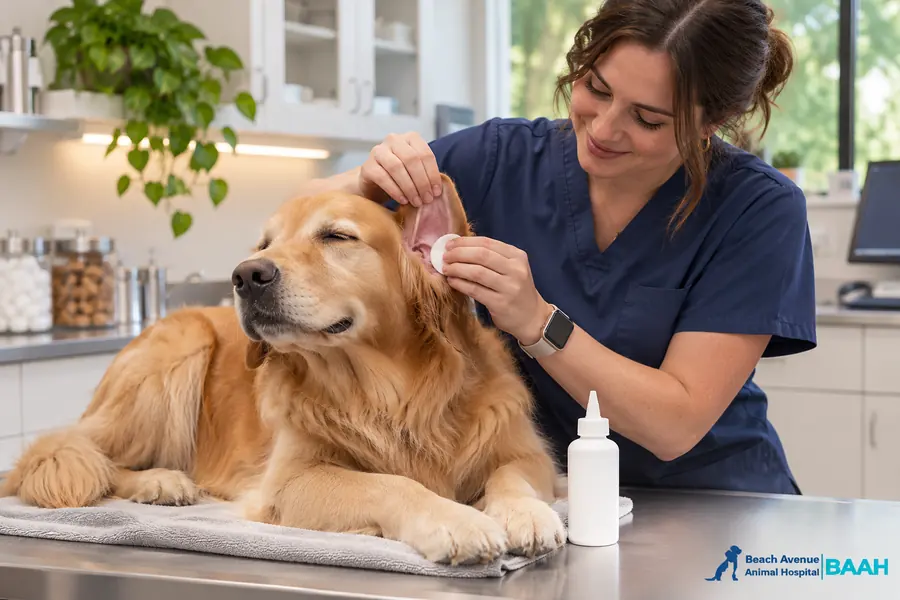
The best prevention is keeping the ear canal clean and dry, especially for dogs who swim or have floppy ears. Dry your dog’s ears after baths and swimming, and check them weekly for redness, smell, or discharge. If your vet has shown you how, learn how to clean your dog’s ears safely at home — and ask us to show you at your next visit if you are unsure. Dogs with allergies need their underlying skin condition managed too, because allergies are the most common reason ear infections keep coming back.
Why Ear Infections Keep Coming Back
If your dog’s ear infection keeps returning, there is usually an underlying cause that has not been found yet. Allergies are the most common one, and ear infections occur in 65% to 80% of dogs with food allergies, according to VCA. Hormonal conditions such as hypothyroidism, ear mites, a foreign body like a grass seed, or a growth in the canal can also keep an infection going. Treating only the infection clears it for a while, but it comes back until the underlying cause is managed too. That is why your vet may recommend allergy management, further testing, or a recheck schedule for a dog with repeat infections.
The Bottom Line
Yeast and bacterial ear infections look alike, they often occur together, and they need different medication, so guessing at home rarely ends well. A quick exam and a swab give you a definite answer and the right treatment, usually at the first visit. If your dog is scratching, shaking their head, or has a smelly or dirty-looking ear, call Beach Avenue Animal Hospital at (778) 784-7959 and we will tell you whether we can see your pet today.
Frequently Asked Questions
How can I tell if my dog’s ear infection is yeast or bacterial?
You can’t reliably tell from symptoms alone — both cause itching, redness and discharge, and both can be present at the same time. Your vet takes a swab and looks at it under the microscope (ear cytology) to find the cause before prescribing treatment.
What does a yeast ear infection smell like?
Yeast infections often have a sweet, musty or bread-like smell, with dark brown, waxy discharge. Bacterial infections more often smell foul, with yellow or light brown discharge — but smell alone can’t confirm the cause.
Can I treat my dog’s ear infection at home?
No — ear drops and cleaners only help when they match the cause, and the wrong product can make things worse or hide the real problem. Book an exam first; your vet will show you how to clean your dog’s ears safely at home after the cause is known.
How much does an ear infection exam cost?
A first exam at our West End clinic starts from $89. The exact total depends on what the exam finds — ear cytology and medication are extra. Call (778) 784-7959 for an estimate before you book.
How long does it take for a dog’s ear infection to clear up?
Most uncomplicated ear infections improve within one to two weeks once the right medication is started. Chronic or recurring infections take longer. Do not stop the medication early: your vet will recheck the ear, sometimes more than once, to confirm the infection has fully cleared before treatment ends.
Sources
Cornell University College of Veterinary Medicine — “Itchy ear problems”
VCA Animal Hospitals — “Ear Infections in Dogs (Otitis Externa)”
PetMD — “Dog Ear Infections: Symptoms and Treatment”