Bringing home your first dog or cat is exciting — and the first month sets the pattern for the years after. This new pet owner checklist walks through what to do before your pet arrives, in the first week, and across the first month: the vet visits, vaccines, parasite prevention and decisions that are much easier to get right at the start than to fix later.
Before Your Pet Comes Home
- Choose your vet now, not during an emergency. Register with a clinic near home, save its number in your phone, and note the nearest 24-hour emergency hospital too.
- Stock the basics. Food (start with what the breeder, rescue or shelter was feeding), bowls, a collar and ID tag, a leash for dogs, a litter box and litter for cats, and a bed or crate.
- Pet-proof one room first. Tuck away cables and chargers, move medicines and cleaning products behind closed doors, and check for small objects a puppy or kitten could swallow.
- Agree the house rules. Where the pet sleeps, who feeds it, and what it may chew or scratch — consistency from day one prevents most early behaviour battles.
The First Week
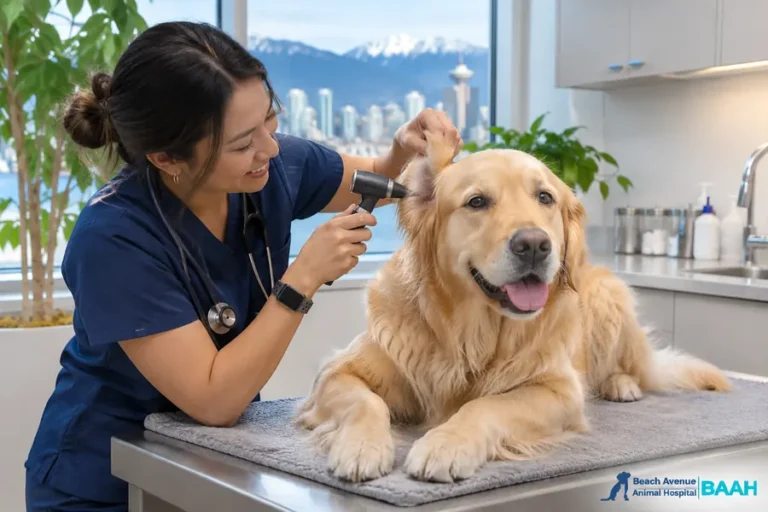
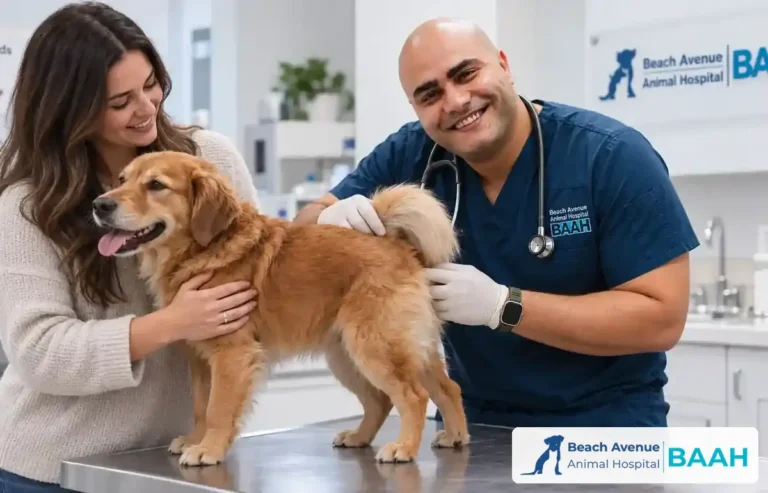
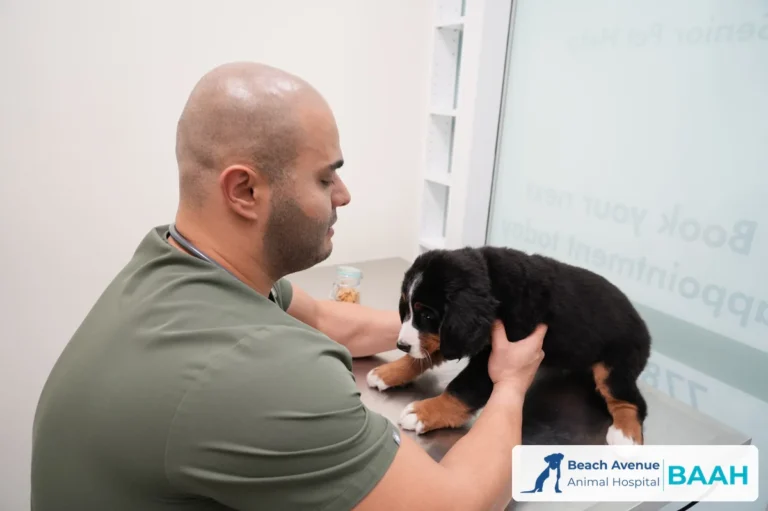
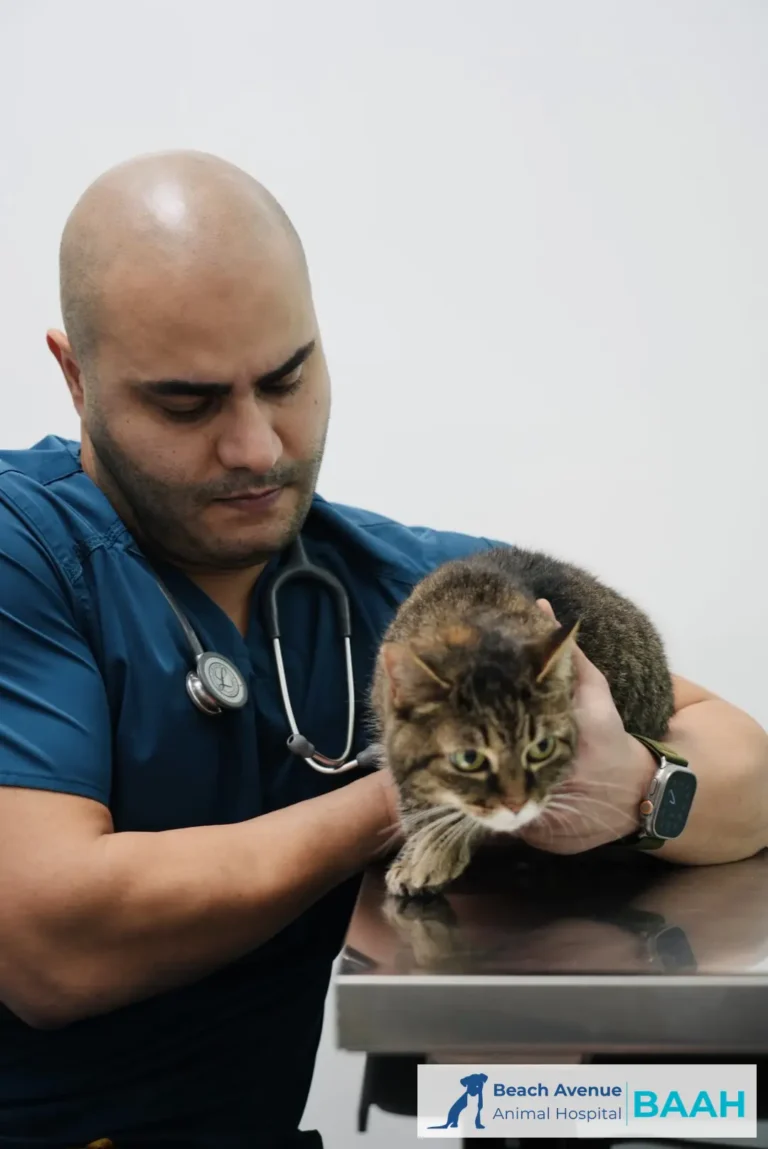
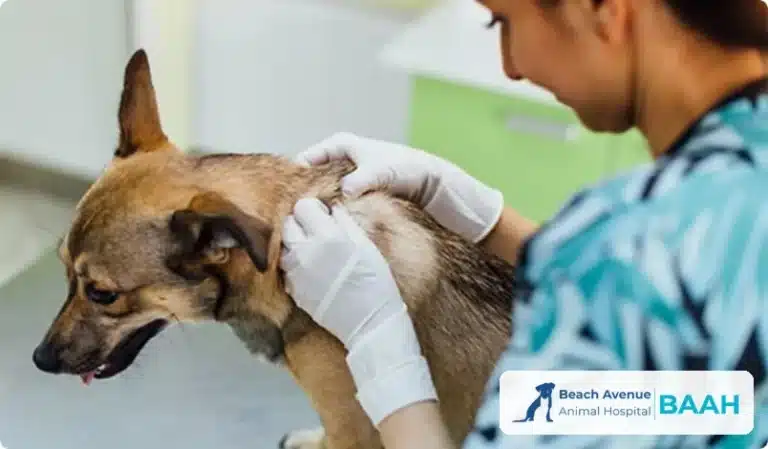
- Book a vet visit within the first few days. Whether your pet came from a breeder, a rescue or a shelter, an early exam confirms it is healthy, checks for anything the paperwork missed, and starts its medical record. A first exam at Beach Avenue Animal Hospital starts from $89.
- Bring every record you were given — vaccine history, deworming, microchip number — so nothing is repeated or missed.
- Let your pet settle. Short, calm introductions to the house, one room at a time. Puppies and kittens especially need sleep — up to 18–20 hours a day is normal.
- Start the routine you mean to keep: feeding times, toilet breaks outside for puppies, and gentle handling of paws, ears and mouth so future vet visits and grooming are no big deal.
Your New Pet Owner Checklist for the First Month
- Vaccines on schedule. Young pets need a series of starter vaccines a few weeks apart; adult rescues may need boosters. Your vet will set the timetable at the first visit — vaccines at our clinic are $40 each.
- Parasite prevention started. Fleas do not wait for summer, and indoor pets are not exempt. Our guide to protecting your pet from fleas and ticks explains how year-round prevention works.
- Deworming confirmed. Puppies and kittens are routinely dewormed; your vet will tell you if another round is due.
- Microchip checked or placed. If your pet is not chipped, or the chip is not registered to you, fix that now — it is the most reliable way home if your pet is ever lost. Microchipping at our clinic is $68–$70.
- Spay or neuter timing decided. Most cats and small dogs can be spayed or neutered at 5–6 months; large-breed dogs often benefit from waiting until 9–12 months. Our spay and neuter page explains the timing and the prices.
- A plan for emergencies and costs. Decide now how you would cover an unexpected bill — savings, pet insurance, or both — rather than during a crisis. Our guide to how much a vet visit costs in Vancouver gives honest local ranges.
- Training and socialisation begun. Puppy classes and gentle, positive exposure to people, sounds and other animals in the first months pay off for the dog’s whole life; for kittens, daily play and scratch-post training do the same job.
For puppies and kittens specifically, our puppy and kitten care page covers the first-year vaccine series, visit schedule and milestones in detail. Work through this new pet owner checklist in order, and the first month mostly takes care of itself.
Frequently Asked Questions
When should a new pet first see a vet?
Within the first few days of coming home, even if it seems perfectly healthy. The visit establishes a health baseline, confirms vaccine and deworming status, and means the clinic already knows your pet if anything comes up later.
How much does a first vet visit cost?
A first exam at Beach Avenue Animal Hospital starts from $89. Vaccines are $40 each if any are due. We confirm any other costs with you before going ahead — call (778) 784-7959 to book.
When should I spay or neuter my new pet?
For most cats and small dogs, 5–6 months is the usual window. Large-breed dogs may benefit from waiting until 9–12 months. Your vet will recommend the timing for your pet’s breed and size at the first visit.
Does an indoor pet really need flea prevention?
Yes. Fleas reach indoor pets on clothing, shoes and other animals, and they live happily in heated homes all winter. Year-round prevention is far simpler than clearing an infestation from your carpets.
Sources
- ASPCA — General Dog Care
- ASPCA — General Cat Care